Leave a comment

Relaxation One Tweet at a Time

The past week has been really busy for us and as the busyness increases so can the stress.  A way to beat the stress, especially when it’s cloudy and cool is to search twitter for @anguillabeaches . You will find a series of short videos that help you fantasize about a warm place with clear water and white sand beaches. I look forward every day to this account appearing on my timeline and so should you. I leave you with a wonderful example below all you need to do is click the link.


https://platform.twitter.com/widgets.js

Leave a comment

A Revelation at Arlington Cemetery

U.S. Army photo by Elizabeth Fraser / Arlington National Cemetery / released

If you visit Arlington National Cemetary just across the Potomac River from Washington, DC there are many things to move you. The wide-open spaces of the military cemetery and its rolling hills with its evenly spaced graves with identical markers are easily considered beautiful. The reverence and tradition of the “Old Guard” unit that marks guards the Tomb of the Unknown. The baseballs that are left at the grave of Abner Doubleday the inventor of the sport that has meant so much to so many. The quiet solemn light of the Eternal Flame at the grave of US President and Navy Veteran John F. Kennedy. The most moving thing for me at Arlington National Cemetary is what is on the back of the tombstones, the names of their spouse. I had never thought of it until the moment I looked at the back of a grave marker. The soldiers and sailors who were lucky enough to find love and marry are allowed to have their spouses buried with them even in a military cemetery. I guess it’s only natural that they wouldn’t have to choose between resting with who they fought with and who they fought for. We thank all the veterans for their service and their spouses for the sacrifice of precious years of their lives together in the name of that service. 

Leave a comment

The Scarlet Rails of South Florida

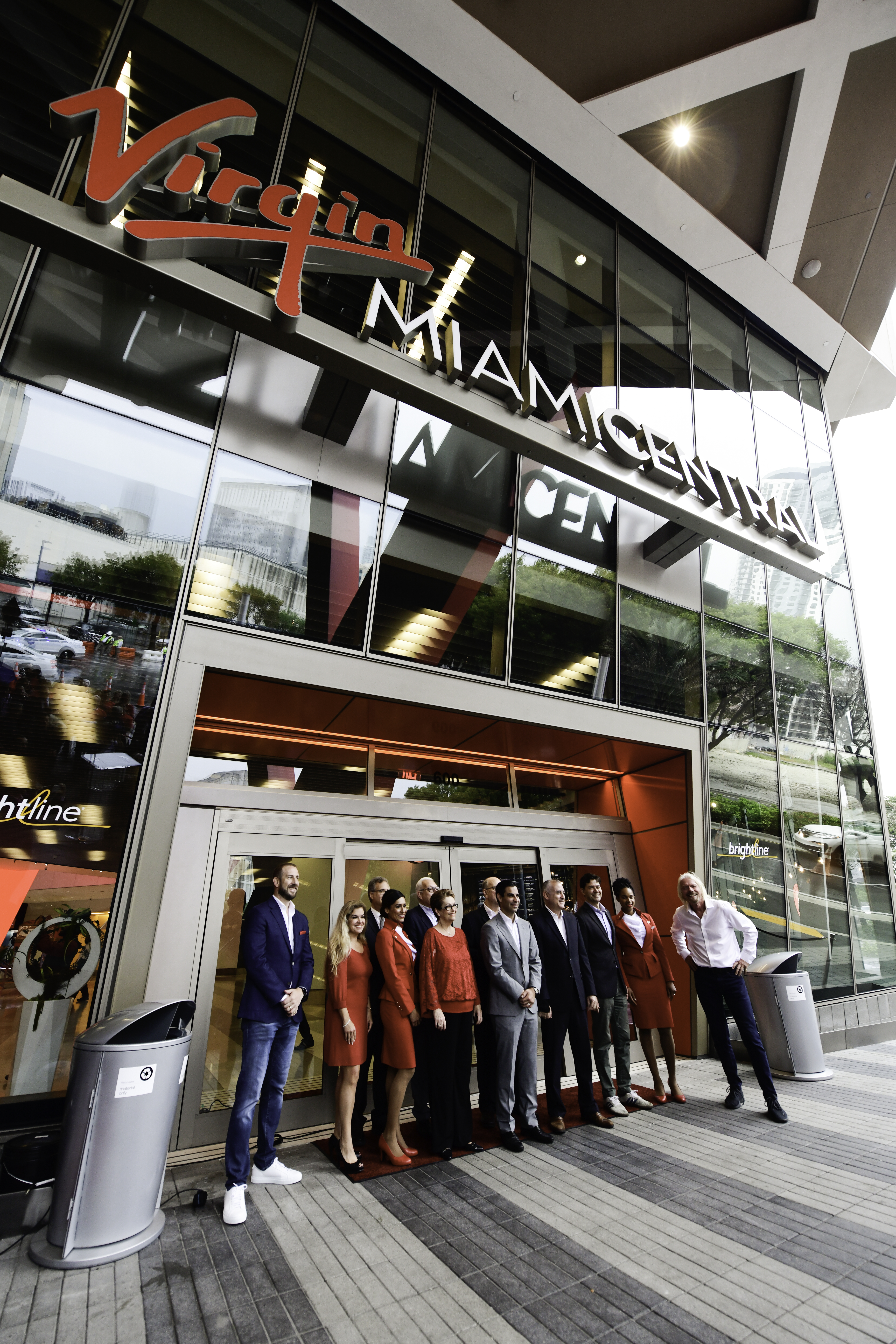
Virgin Trains Terminal in Miami (Source Virgin Trains)

Virgin Trains, a subsidiary of Virgin Group, is a privately funded rail company is developing 170 miles of new track into the completed state-of-the-art intermodal facility located in the new South Terminal at the Orlando International Airport (MCO) as part of the company’s Phase 2 expansion into Central Florida.

“This is a historic milestone on the path to reinventing passenger rail in America and clearly demonstrates the leadership role that the private sector can play in revitalizing our nation’s infrastructure,” said Virgin Trains Chairman and co-founder of Fortress Investment Group Wes Edens. “Virgin Trains service between Orlando and Miami will launch an American passenger rail renaissance. We expect that this will be the first of many passenger lines in the U.S. that follow this model for connecting city pairs that are too close to fly and too far to drive.”

Virgin Trains’ expansion into Orlando the most visited city in the United States comes as travel to the Sunshine State is at an all-time high. Orlando International Airport welcomed a record-breaking 47 million passengers last year.

“Officially launching construction to Orlando marks a huge milestone for Virgin Trains and the realization of our vision to reinvent passenger rail in America,” said Virgin Trains President Patrick Goddard. “Connecting Orlando and Miami, two of our nation’s greatest cities, will provide tremendous economic and environmental benefits that
will be an asset to Florida for generations.”

The Expansion between Orlando and South Florida represents isn’t the only route Virgin Trains’ has planned as they have also announced that they have begun construction on a line that connects Southern California and Las Vegas Nevada.  If you want a peek at what to expect riding the scarlet rails of virgin trains you can see the New Miami Central terminal and take a ride between Miami and Fort Lauderdale.

Leave a comment

Cruising Conference

The Florida-Caribbean Cruise Association (FCCA) announced at its conference this weekend that they are stepping up efforts to make the USVI an even greater destination for the cruise industry. The USVI delegation, which included Commissioner of Tourism Joseph Boschulte, his team at the Department of Tourism and representatives from The West Indian Company Limited and the Virgin Islands Port Authority, was briefed by cruise industry leaders to help them understand and respond to the growing needs of the cruise industry. The sustained infrastructural investment the territory is making on St. Thomas by revamping the port in Charlotte Amalie, improving Main Street in downtown, and dredging projects for the cruise ships were all discussed at the meeting.

Governor Bryan also referred to the need to rebalance the industry: “We have a very mature tourism product in St. Thomas and we have an emerging market in St. Croix (and) St. John. (We must determine) how we combine those things in the right way that not only gives us the spend that we want but also attracts the type of customer that’s going to have the vacation that they want in the U.S. Virgin Islands.”

Orlando Ashford, President of Holland America Line (second from right), talks cruise tourism with (pictured clockwise) Commissioner Boschulte, WICO board member Jason Charles, and Governor Bryan. Credit Bevan Springer

The FCCA and the USVI also had discussions on the inclusion of the other islands and territories like the British Virgin Islands and St. Lucia in an overall plan for the growing cruise industry.

Leave a comment

A Naked Seat Back

Airplane seats

I remember the first time I stepped onto a plane and saw the amazing sight of small television screens in the seatbacks. It was a Virgin Atlantic plane named Tinkerbell and it was the late 90s. I couldn’t help but think of it as luxury air travel. I’d been on long-haul flights with suspended screens that played one movie for everyone. I remember it felt like I was trapped in a sketchy movie theater without even the benefit of stale popcorn or flat soda. The advent of seatback entertainment that let you choose your own movie or TV show seemed to be the perfect solution.

It seems, however, the age of the seatback screen might be coming to an end. Three of the largest U.S. airlines are removing seatback screens from most narrowbody aircraft in their domestic fleets. United Airlines along with American Airlines and Alaska Air (yes, Alaska Air is a major airline) are going to begin removing screens from their 737 and A320 planes in favor of a B.Y.O.S. model. The air carriers will now offer streaming options for those who abide by the Bring Your Own Screen philosophy. 

You can blame your smartphone for this change in attitude amongst other factors. The global population of air travelers tends to have smartphones or some sort of digital device they can use to stream their chosen entertainment. The airlines can rely on the B.Y.O.S. system, make the seats thinner, lightening the overall weight of the plane and lowering fuel consumption. The maintenance of the systems can be removed from their ledgers, too. 

We understand the idea of ending the seatback screen isn’t new. We have seen reports as far back as 2017 citing that the airlines are going to retire the systems. The removal of the system isn’t a problem in our eyes, despite the convenience, with a couple of caveats. First, all seats must have USB or plugs in order to power our devices so we don’t get off the plane with a dead phone. Second, add a hook, or a shelf, or a clamp of some sort so we don’t have to hold our device the entire time we are watching a movie. Third, don’t make us download proprietary software for each different airline we fly. If the airlines think we will make our choice of carrier based on this… we won’t. We will still choose based on price and just delete your app each and every time we deplane.

Next time you fly a domestic route, be mindful to bring your own screen and a battery backup just in case there is no in-seat power.


Leave a comment

Big Cat Rescue

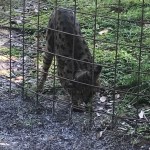
I think one of the first things we learned about Tampa when we were considering moving here was that it was the home of Big Cat Rescue.  We love big cats. We love cats in general. This love of big cats was definitely cemented on our trip to Africa and seeing these beautiful creatures in the wild.

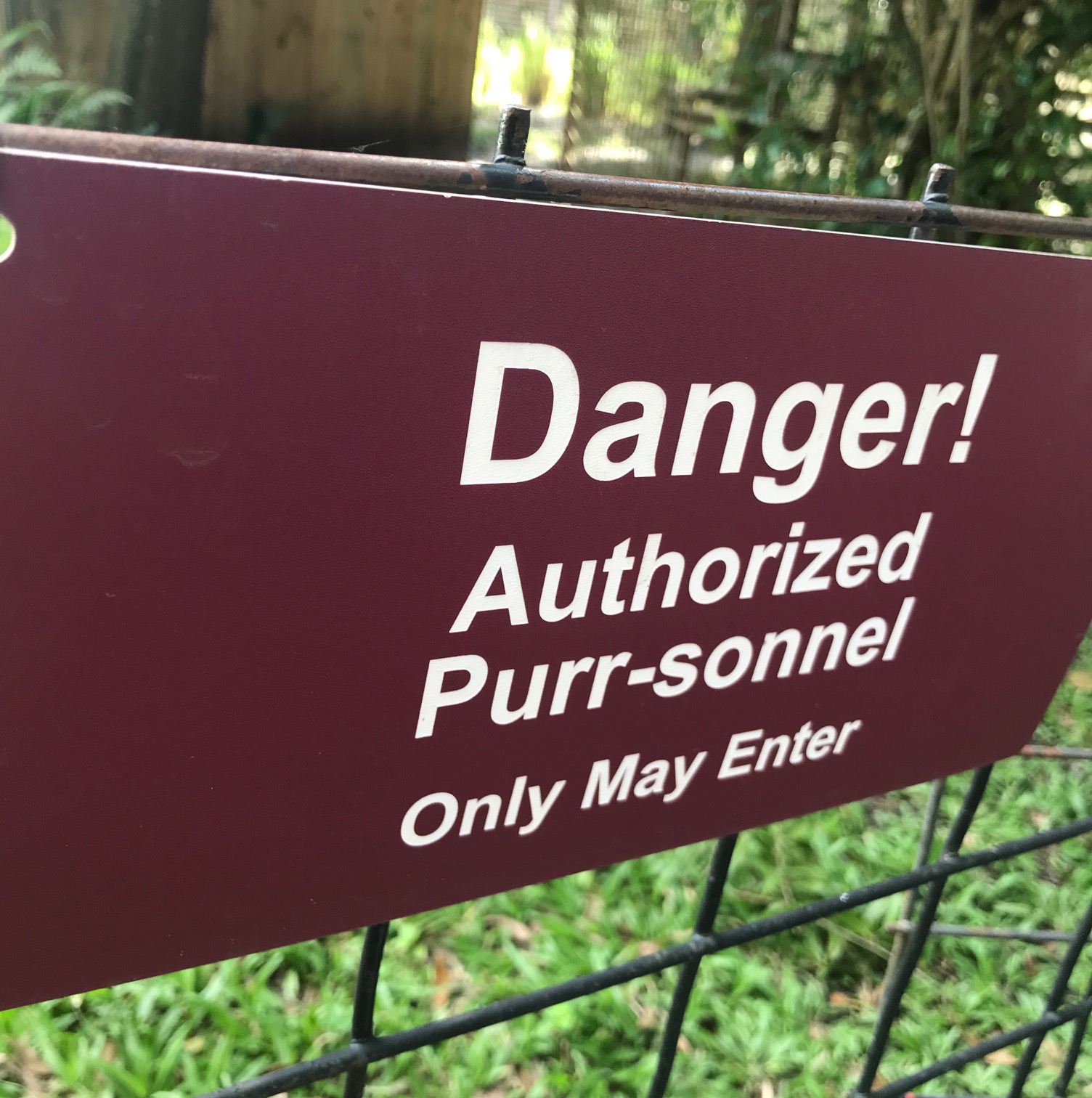
Big Cat Rescue is one of the largest accredited sanctuaries in the world dedicated to abused and abandoned big cats. The sanctuary, which opened in 1992, works tirelessly to end abuse which often goes hand in hand with the private possession and trade of exotic cats. Big Cat Rescue has been constantly lobbying for federal legislation to make possession of big cats illegal in the United States. The sanctuary refers to itself as a retirement home to the 80+  lions, tigers, bobcats, cougars and other species that have taken up residence as their forever home since they will never leave the reserve.  The animals have mostly been abandoned, abused, orphaned, or retired from performing acts. The tours, open to the public, explain the reasons no one should keep a wild animal as a pet as well as relating the heartbreaking stories of these animals’ lives before coming to Big Cat Rescue. The tickets aren’t cheap ($39 plus tax), but the purchase price goes directly to managing the rescue which is mainly run by volunteers and interns.

We hope you enjoy some of the pictures of the felines we met during our visit. You can catch many of them on the Big Cat Rescue’s live cams, available through Explore.org.

Leave a comment

Paradise Discovered: The Unbreakable Virgin Islanders

Author and journalist Peter Bailey debuted “The Unbreakable Virgin Islanders”, the second film from his Paradise Discovered series on his birthday September 16 at Prior Jollek Hall on Antilles School campus on St. Thomas coincidently the same school where my younger sister teaches.  The documentary reflects on surviving both hurricanes Irma and Maria on his native St. Thomas alongside a cross-section of voices across the Virgin Islands. We don’t know about distribution yet but if you love the islands and its people you should keep an eye out for this cross-section of touching stories.

Leave a comment

Oldsmar Flea Market

Oldsmar Flea Market entrance

Main Entrance

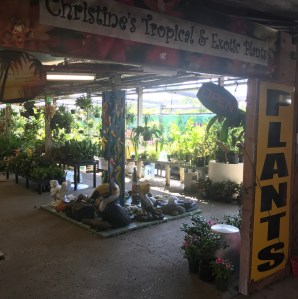
Have you ever passed a place dozens of times and always wondered what it’s like inside?  For me, the Oldsmar Flea Market in Oldsmar, Florida, near Tampa, was that kind of place. We decided to stop in yesterday and take a look around.

The first thing we can say about it is that it’s big. The site and its parking lots cover 28 acres. A series of long narrow buildings running parallel to each other house the market, giving you shelter from the sun and potential showers.

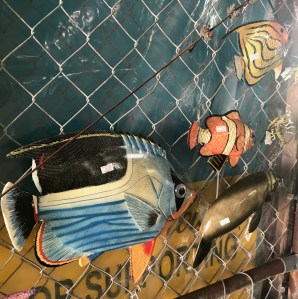
You can find a little bit of everything there from the expected used nick-nacks to clothing, jewelry, golf equipment, and cookware. You can even get fresh produce with stands selling locally grown crops. The market may be shaded but it is still hot and there is no AC. You should be sure to hydrate. You could also visit one of the many food vendors spread out over the complex for a drink or snacks like hot dogs and mini donuts. You will want to wear comfy shoes since you’ll be walking on concrete floors.

The market has been in business for over 40 years and according to a statement from the owners, it (the market) is trying to evolve from fleamarket to a world-class marketplace for vendors. You should take some time over a weekend to look around at the market because you might come across something you never knew you needed. The hours are Saturday and Sunday 9-4.

Leave a comment

Buddhist Church?

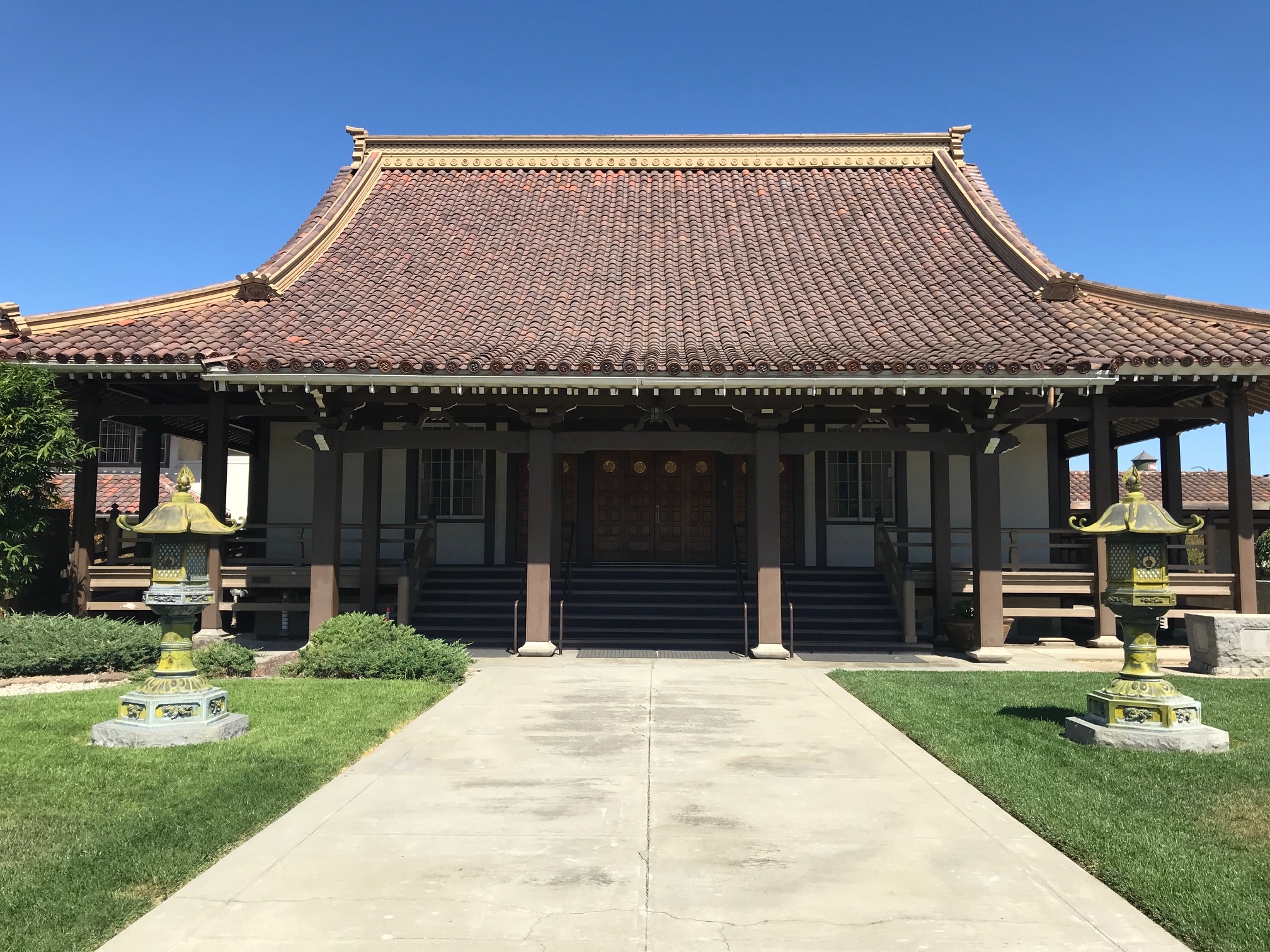
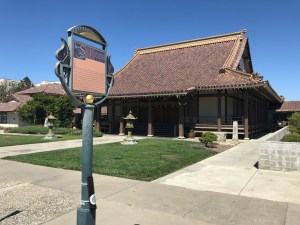
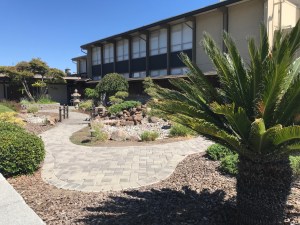
The Buddhist Church of San Jose.

You would refer to a Buddhist house of worship as a temple, right?

On a recent trip to San Jose, I found out that isn’t always the case. The San Jose Buddhist Church was founded in 1902 by Japanese and other Asian immigrants in the city’s Nihonmachi (Japantown) neighborhood. I found that designation as a church a bit confusing and asked my tour guide about it. I was told that it was part of assimilation.

The immigrants would hear the other members of the community, mainly Christians, talk about going to church on Sunday. Immigrants would also be asked if they went to church. The simplest thing they could do in order to assimilate was just to call their Buddhist Temple a Buddhist Church. The change in nomenclature was an extremely simple way for the community to assimilate without having to give up something so important to their identity. The term church is now often used interchangeably with temple for many in the Buddhist community in the United States.


Leave a comment

Internment of Japanese Americans (1942-1944)

The internment of Japanese Americans in the United States during World War II was the forced relocation and incarceration in concentration camps in the western interior of the country. The number of Americans incarcerated was between 110,000 and 120,000. At least 65% of those interned were full-fledged United States citizens. The forced relocation of these hard-working Americans was ordered by President Franklin D. Roosevelt. A great number of the citizens were the second- and third-generation Americans descended from Japanese immigrants who held only the equivalent of a green card because they were barred by U.S. law from being granted citizenship. The excuse at the time was that they might be loyal to Japan and launch a terrorist campaign against west coast targets or become spies for the Empire of Japan. 

The internment, as many suggested in its time, today is considered more a result of racism than a security risk.

During relocation, citizens were told they could only take what they could carry and to leave the rest behind; most lost everything.
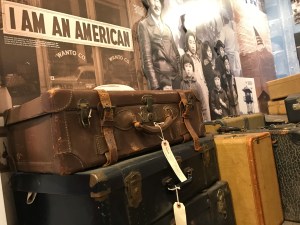
Could you fit your life in one bag? You were only allowed to bring what you could carry.

The Supreme Court ruled to uphold the constitutionality of the Exclusion Act in Fred Korematsu vs. U.S. but only by sidestepping the main issue and only ruling on the exclusion order — not on the lawfulness of incarcerating citizens without due process. The court surprisingly ruled in favor of Mitsuye Endo. Endo worked as a clerk for the California Department of Motor Vehicles before her relocation and the court conceded that her rights were violated and she should be released. But the case wasn’t a class action, so it only applied to her. She chose to stay in the camp and continue her legal fight so it would stay in the public eye.

Internment ended in 1945. In 1988 President Ronald Reagan signed the Civil Liberties Act into law; it was an official U.S. government apology for the policy of internment. They also paid $20,000 to each camp survivor as restitution. The law admitted the government’s actions were based on “race prejudice, war hysteria, and a failure of political leadership.”

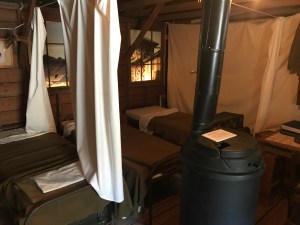
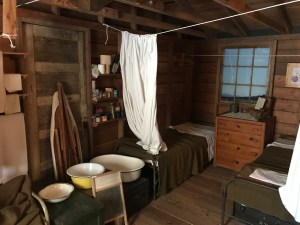
The camps were not similar to Nazi death camps. The camps were an embarrassment and a stain on the land of liberty but were designed more like towns. The camps had shops, farms, clinics, high schools, and movie theaters. Internees were still prisoners but could feign normalcy. The students in high school even produced yearbooks. The internees were also able to make money by creating crafts and other goods and having them legally sold on the outside by designated agents. The conditions weren’t perfect. The dorms were divided up for families, but the walls didn’t go to the roof so there was a lack of privacy. If you were single or a couple you probably had roommates. The kitchen/mess hall was communal as well as the toilets and showers.

I can’t say enough about the heartiness of these people. The country they loved betrayed them. They took all that punishment from the government and still wanted to serve in the armed forces. The returned to their lives or what was left of them after the war and tried to carry on. The lasting legacy of the Japanese internment is having a living group of people in our country that speak out when they see racism and discrimination and remind us what can happen even in the land of liberty when we let paranoia and racism go unchecked.