Leave a comment

Finding Freedom

I feel free when a gentle breeze caresses the back of my neck on its way to the tender embrace of a tall, white sail. My love affair with this variety of freedom began at an early age and from afar, watching beautiful ladies as they quietly moved with purpose across the blue Chesapeake Bay. I felt envious of the freedom they had, moving anywhere the wind blew, a home on a liquid highway far more romantic than a camper on an interstate. I would dream of one day owning my own ship and sailing the world; it’s a dream I haven’t given up on. But the practicalities of life and living an hour or more from the water have tempered that dream.

I get tastes of that dream life when we travel. We’ve made it a tradition to hit the water for a sail when we get away. We have sailed on fine old ladies made of wood and propelled with canvas with names like Selina and Winifred. I begin to relax immediately upon placing my feet on deck. The gentle rocking motion beneath me and the sound of water lapping against the hull seems to leach the confining stress and worry of the real world from my skin. The clicking sound of a ratchet biting down on a line is the simple alert that adventure is on the way. The sight of a rising sail flapping, then snapping taught and harnessing the wind carries my heart out of my chest and across the sea and time. My imagination leaps at the chance to picture myself as an early explorer wondering what secret world lies in each hidden cove. I know the freedom I have on the water makes visiting each one a possibility. It’s a freedom rolling down a highway with the constraining walls of yellow and white can never provide.

I feel free when I’m not confined by gravity when I can fly, or should I say float, in a universe that is not my own. Without fail, every time we step off the edge of a dock or back of a boat my wife says “I love the water”. I think it’s because of the sense of freedom you get in an environment that allows you to forget the laws of gravity for a while. I love the fluid grace water adds to your movements making motions that are sharp on land truly fluid.

Freedom.

Freedom.

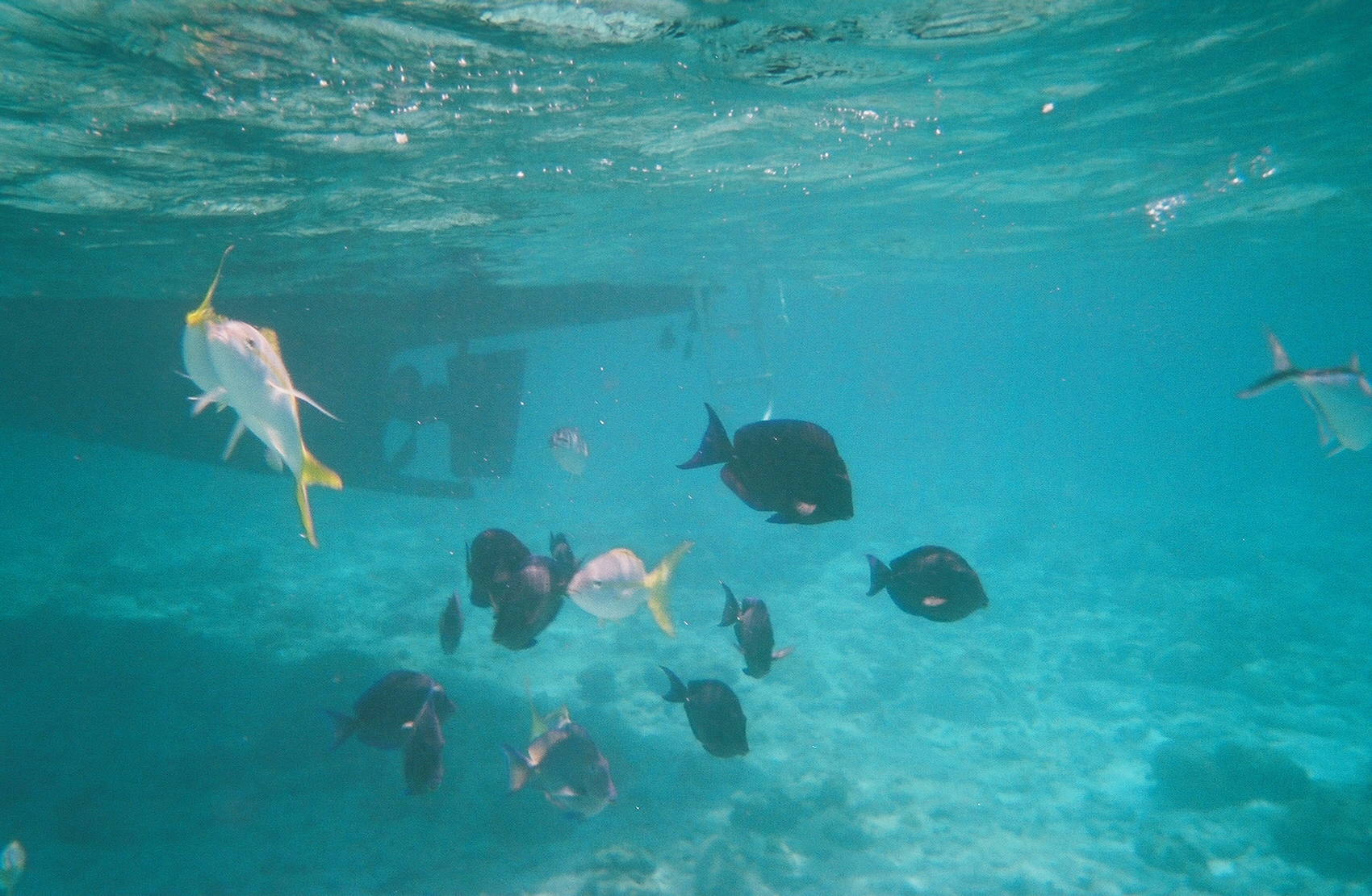
I love diving, not with a scuba tank or from a high dive, but from the surface of the water to the coral beds below much like a dolphin. Like our confused mammalian cousin I to pretend to be a fish. I float here and there, spinning and turning to look at all the life around me. The only thing reminding me I don’t belong is the eventual burning in my chest telling me to surface and breathe.

I love the feeling of freedom you get in the water, unbound by the rules that govern your everyday life. Where the birds aren’t the only animals that soar above and squirrels aren’t the only creatures hiding in the rocks. The currents carry away my burdens and leave only me, free to float on the tide in an alien world I dream is my own.

1 Comment

Simply Santorini

Have you ever sat at your desk and dreamed of getting away to Greece? Spent hours staring at the Greece calendar hanging on your cubicle wall and fantasize of romantic vistas of whitewashed houses? Stacked up sugar cubes and imagined them as a Greek Island village? [Okay, I understand if I’m the only one who did that one.]  All of your village dreams of those caldera views that fill no less than seven of the 12 months of your calendar come from one Greek island: Thera. Never heard of it? Sure you have, just by its Latin name, Santorini.

I’ve visited the fabled location of Atlantis several times. It can be a destination that soaks up your island-hopping budget like a Scandinavian does sunscreen, but I’ve learned where to save and where to splurge.

If you’re going on an island hopping adventure your first splurge should be a plane ticket. The U.S. (not being as enlightened as the rest of the world) leaves its employees with just a couple of weeks of vacation a year, so making the most of your time is important. When you land in Athens spend that money and fly to Santorini and save a full day that would have otherwise been spent on the deck of a ferry boat, sailing from the Athens port of Piraeus to Santorini’s port of Fira (Thira). The plane will take you about two hours door to door, 45 minutes to one hour in the air.
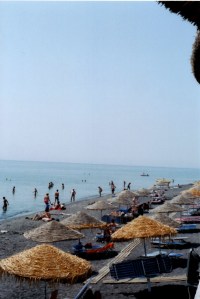
The black sand is HOT. Use caution.

The black sand is HOT. Use caution.

First things first, you go to Santorini for the views, not the beaches. While the island has many good beaches, they are not the best in the islands. The beaches are unique and worth a visit because the volcanic eruption that shaped the island also deposited black and red sand on its shores.

Tip: make sure you have a pair of shoes or sandals you can use in the water. Do the math black sand + scorching sun = frakking hot.

The most popular beach is Kamari Beach, which is made of black stones and lined with hotels, taverns, restaurants and shops. It tends to get very crowded in July and August. A less popular beach is the Paralia Kokkini beach, the red sand beach, which is just past the archaeological dig site at Akrotiri. It’s less popular because it’s not located near one of the larger resorts and you have to take a bus to get there. There are a few accommodations nearby, as well as tavernas near the beach.

Splurge: Akrotiri is definitely one of the places you will want to visit even if you aren’t an ancient history buff; it’s just plain neat.  The ancient town of Akrotiri is Greece’s much older answer to Pompeii. When the island blew apart in a volcanic explosion around 1600 B.C. the town was buried under mountains of ash. The area has been covered (to protect the site) and gives you the eerie sense of walking in an underground city complete with streets, pots, tools and even multistory buildings, all much as they were before the town’s evacuation and burial.

Splurge:I would also recommend the Boutari Winery, just south of the archaeology park. The wine is outstanding, especially the Kretikos, a fruity, dry white wine said to be made from the same varietal grape the inhabitants of Akrotiri would have used. The winery is open to the public for tours and tastings. A flight of several wines is available as well as a tour and multimedia presentation.

The iconic view of the caldera from Oia, Santorini

The iconic view of the caldera from Oia, Santorini

Save: You may have dreams about waking up in one of the whitewashed dove cove houses clinging to the cliffs overlooking the caldera, but unless you have significant means, your budget isn’t going to make that dream a reality. The cost of one of those beautiful hotels can easily set you back $300 to $600 a night. I suggest spending that money on a hotel in one of the island’s beach towns like Perissa or Kamari for more reasonable rates (starting at $100 per night). You can always take one of the frequent buses to the top of the caldera to have a meal and watch the sunset.

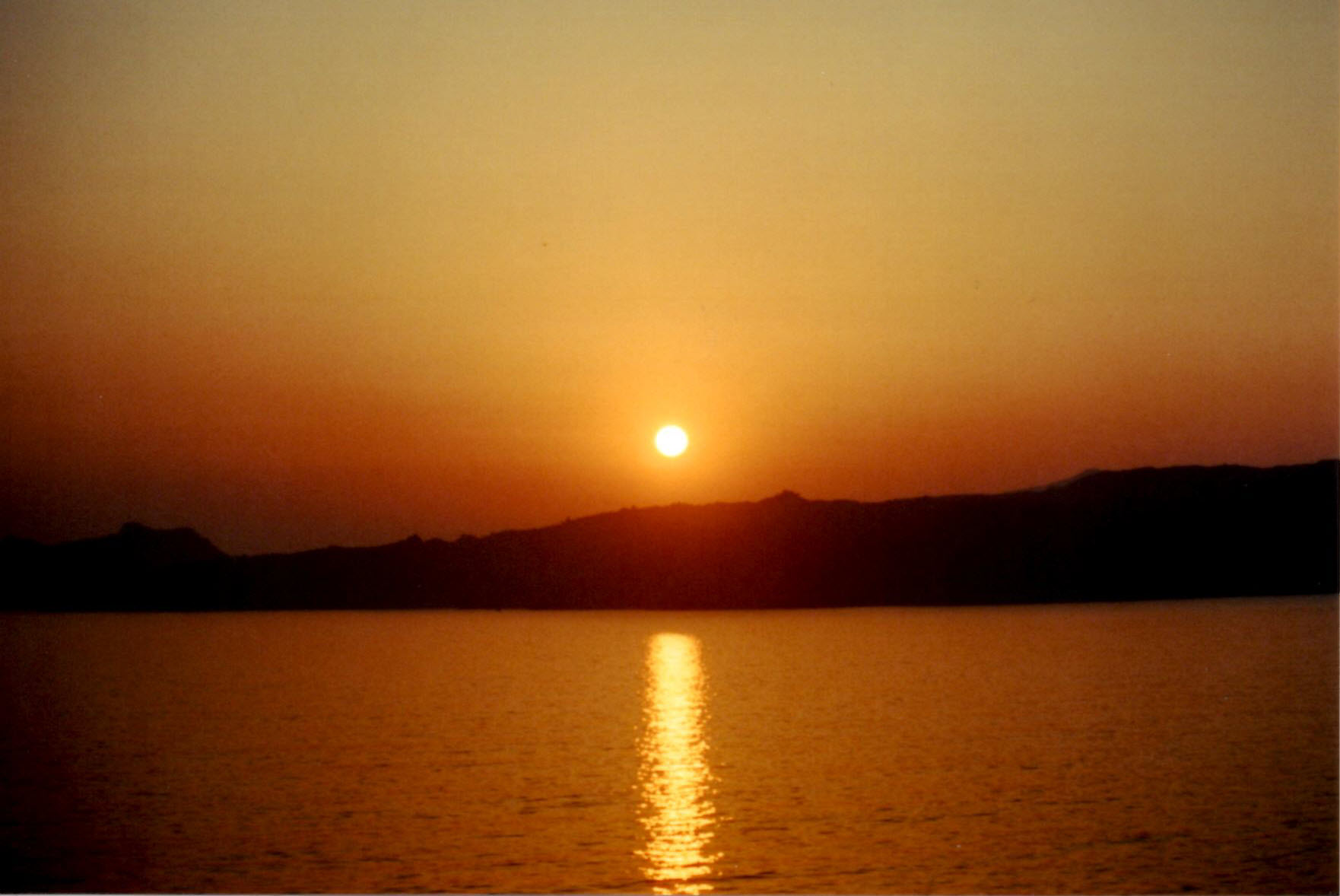
The most magical moment on Santorini: sunset.

The most magical moment on Santorini: sunset.

Splurge: Have at least one meal at a restaurant on a terrace overlooking the caldera in either Oia or Fira. I would check a current travel guide  or a site like Trip Advisor for suggestions, as many restaurants can be great one trip and be terrible the next.

Save: Go to a local market and get yourself a bottle of wine and a plastic cup. Then find a spot along one of the walls overlooking the crescent-shaped caldera for the number attraction in Santorini, the sunset.  It’s one of the best in the world, mentioned in nearly every travel log written about the island. You’ll want to claim your space along the wall early; it fills up quickly. Bring your wine, a snack and someone to share the moment with and let yourself get caught up in an amazingly romantic moment at a bargain price. You should also keep your eyes out because sunset often brings out the diamonds with couples getting engaged at that very moment.

Save: You may want to shop, and we all do on vacation, but save your money here. You can find many of the products you’ll see in Fira for far less on the other islands. Although it goes without saying that if you see a piece of original jewelry you must have the decision is between you and your bank account.

Touristy Splurge: Take trip to Palea Kameni or Nea Kameni, the two smoldering volcanic islands in the center of the caldera. Even if you don’t smoke (yes, it’s bad for you), I suggest bumming a cigarette from someone so you can light it by placing the tip on the smoldering ground. The idea of walking on a smoldering volcano is surreal and makes a great story to tell your friends.

You really only need to spend a couple of nights on the island before moving on to your next stop. I suggest two nights because if you’re like me you’ll only be able to take the crowds for a limited time before you’ll start feeling overwhelmed with humanity. I’ll agree, as many do, that Santorini is one of those islands you have to visit once before you die. I’ve been three times, which is probably plenty, but I wouldn’t refuse to go again.

Leave a comment

Travel by Tastebud

If there’s one thing I learned growing up in a warm climate and without air conditioning, it’s that it’s often too hot to be in the kitchen. It’s a problem my mother solved with a delicious solution: cooking outside. In my mind, summer is very closely associated with charbroiled flavors from the fire (or grill).

My mother (Greek by marriage) had no shortage of recipes that work well over a flame. When you flip through any Greek cookbook you’ll find dish names like souvlaki, kotópoulo and αρνί, all prepared on the grill. If you’ve ever traveled in Greece and walked by a seaside café you’ll find smoky tastes of grilled vegetables, nuts and meats floating in the air. So for this blog post I thought I’d put up some of our favorite grilling recipes from or inspired by Greece.

Mama Changuris’ Greek Chicken Marinade (works with lamb or beef, too):

  • lemon
  • olive oil
  • garlic
  • onion
  • salt and pepper
  • rosemary
  • oregano

The beauty of this recipe is that you can completely customize it for your taste. Love lemon? Use a lot. Not a big fan of rosemary? Use a little (or leave it out). No onion on hand? Fine.

Lamb Shish-Kebab (Souvlakia)

  • 1/4 cup olive oil
  • 1/4 cup wine vinegar
  • 1/4 cup lemon juice
  • 1 garlic clove, minced
  • salt and pepper
  • dried oregano
  • 4 pounds boned leg of lamb, cut into  1½-inch cubes

Combine oil, vinegar, lemon juice, garlic, salt pepper and oregano. Add meat and toss to coat. Refrigerate for 3 to 6 hours, turning meat over several times. Thread meat onto oiled skewers. Grill until evenly browned. Yield: 6-8 servings.

Variation: Beef sirloin or pork can be substituted for lamb.

Greek saladGreek Salad

  • tomato
  • onion
  • cucumber
  • olives
  • olive oil
  • red wine vinegar
  • feta cheese

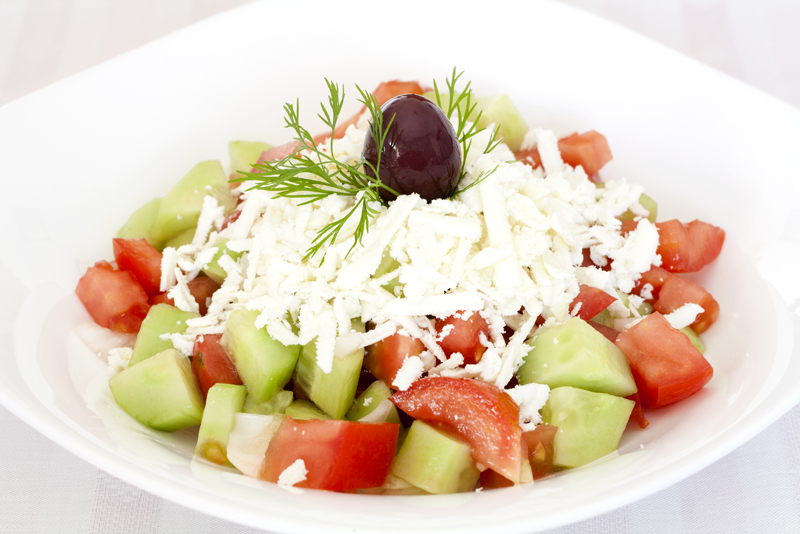
That’s right, when you order a traditional Greek salad in Greece you won’t find lettuce on your plate. Most areas of Greece don’t get enough rain to grow it well, so it’s not traditionally used. Modern growing techniques and produce distribution have made lettuce more readily available, but we’ve ordered more lettuce-less salads than not on our trips to the Greek islands.

You’ll also notice the simple oil and vinegar dressing. That’s what we found served most often, but just in case you’re looking for a milder option here’s a simple recipe for Greek dressing:

Greek Salad Dressing

  • 2/3 cup olive oil
  • 1/2 cup wine vinegar
  • 1 teaspoon salt
  • 1/4 teaspoon pepper
  • 1 garlic clove, crushed (optional)
  • 1 teaspoon dried oregano

Combine in a jar, cover and shake well before using.

Leave a comment

Visiting Metropolis

Have you ever wanted to visit Metropolis, the home of DC Comics’ Superman, and thought it solely existed in the pages of comic books and on the big screen? Well you are mistaken.

This is the header on the official City of Metropolis website.

This is the header on the official City of Metropolis website.

The city of Metropolis, Illinois is located at the southernmost tip of the state and boasts the title “Home of Superman”.  The town was named Metropolis way back in 1839 (nearly 100 years before Superman was created in 1938). It’s located on the Ohio River and was a bustling port town in the late 19th and early 20th centuries.

Image courtesy: sillyamerica.com

The city’s Superman Celebration, now in its 35th year, just ended last week. The event features parades, visits from actors who have played Superman (and his friends and foes) on screens big and small, and plenty of Superman cosplay. The city even boasts a 15-foot-tall bronze statue of the hero in aptly named Superman Square. A statue of intrepid Daily Planet reporter Lois Lane as depicted by Noel Neill was erected just down the street.

If you haven’t had enough truth, justice and the American way you can also visit the SuperMuseum, located where else but off Superman Square. The museum has the largest privately owned Superman collection in the world, with props, artwork and costumes.

While you’re in town, pick up one of the best guides for all things Superman and  Metropolis: Metropolis Planet. The weekly publication alerts readers to upcoming “Super” events (their words, not mine).

A town as sophisticated as Metropolis also has other things to do like a large historic park with a replica of a frontier fort, wineries, the Kincaid Mounds Archaeology Site that dates back to 1500 AD, and a Harrah’s Casino. So your trip doesn’t have to be exclusively about what’s in the pages of a comic book.

Going to Gotham?

If you want to visit Gotham City, the home of Batman, it’s a little harder.  The only Gotham that comes up in a Google search is the small town of Gotham in Nottinghamshire, UK. It doesn’t really fit the dark, crowded city depicted in Batman, but I suppose it could be home to a Dark Knight.

The city most often identified as Gotham’s inspiration is New York City, though DC Comics has never made that official. I did find a quote from the co-creator of Batman, Billy Finger, who admitted he got the name Gotham from the name of a jewelry store, Gotham Jewelers, in the New York City phone book. So if you want to have that Gotham experience (which in the comics is filled with grit and crime), take a trip to NYC.

Leave a comment

Meeting the Maasai

A red carpet welcome, Maasai style, awaited us when we visited a small village about halfway between the Olduvi Gorge, the location of our earliest anthropological evidence of our human species, and the Serengeti. I was afraid that the village would be like a showcase, since we were told that the village is regularly visited by tourists on their way to the open plains. Our guide, George, stayed in the truck as the Maasai guide, Daniel, led us to the entrance of the village or manyatta where a welcoming committee of dancers awaited us.

The dance groups were separated along gender lines and encouraged participation. I politely declined (to focus on my role as family photographer) and was able to film my sister Andrea and my wife Amanda become part of the female collective and began to dance with the other women using a mix of shoulder shrugging and vertical jumps. The girls were also “given” brightly colored necklaces to wear during the dance. They were encouraged to buy them after the ceremony, but declined politely.

The men’s dance was similar as they assembled in a line and with a jaunty march paraded in a serpentine pattern. Then, just like in Footloosethey gathered in a dance circle, but instead of the breaking out into the cabbage patch and running man each man would come forward and jump as high as they could, as stiff as a pike. Amanda noticed some competition between them with the higher jumps getting greater applause. The whole event was accompanied by a droning almost vibrating and hypnotic vocalization by the other men in a one, two rhythm.

Once we were officially welcomed, we entered the manyatta through a wide fence made of twisted thorny acacia branches (a deterrent to keep wild animals, predators, out of the village/stock yard).  The five of us split up and so we could get a closer looks at the huts or inkajijik- circular huts made of sticks, mud, ash and cow dung (bringing a whole new meaning to sh!t a brick). Daniel literally kicked a lady out of her house for a few moments so we could climb inside the two-bedroom model.

The 8′ x 6′ residence had a low ceiling and narrow entrance was, as dictated by Maasai culture, constructed by women. A small dirt space was the kitchen, meeting room and pantry and two narrow platforms separated by a wall of twigs defined the sleeping areas. The whole space was dark and tiny, I don’t think I could have laid flat on my back on the beds or in the open space, I definitely couldn’t stand up. I asked Daniel how they keep the rain out, considering a mud roof, he replied that they bought blue tarps and covered the huts when it rains.

The highlight of the trip was our visit to the small school just outside the village. The crudely-built structure was packed with children sitting on long benches. A teacher, a woman, sat at the front of the class with a small blackboard. A curious note was that children seemed to come and go as they pleased. I figured in a way that made sense; I didn’t see one watch or clock during our entire visit. The teacher (who seemed a little distressed by our visit) only tolerated our presence, but the children loved it.

We brought presents for them, so like any small children between the ages of 4 and 8 they were really excited. We had lugged more than 40 pounds of school supplies from home; workbooks featuring Sesame Street characters seemed to be universal, pens were a big hit and the kids really lit up when we passed out balloons. Oh, how they loved balloons. The older Maasai children go away to boarding school or live in villages closer to higher education.

I have mixed feelings about the Maasai. I was never treated rudely or made to feel unwelcome and it was a great look into our collective past as hunter/gatherers living in a semi-nomatic world. I just couldn’t help but see the crushing proverty and what looked to be a dying way of life.

The Maasai herding practices leave the land around the villages on the verge of desertification from overgrazing. A plethora of diseses also affect the children such as worms, eye infections, pneumonia and malaria – and that’s if the child survives past three months. Until they make it to the three-month mark, infants aren’t even counted as members of the tribe. According to a Save the Children report the infant mortality is a staggeringly high rate of 175 deaths per 1000 births. The report doesn’t single out the Maasai for the rate, but my intuition says their death rates are likely higher than those in Tanzania’s cities like Arusha and Dar es Salaam.

I don’t want to see the Maasai culture disappear, but I’m hopeful it will adapt. The modern world is here and can offer so many ways to raise the standard of living for both Maasai parents and their children.

My heart goes out to the people of the village we visited. Our guide, George, told us very few Maasai girls attend school, but there are organizations working to increase support for them. You can help them by donating to the Maasai Girls Education Fund.

Want to help in a broader sense? Chip in to UNICEF or Save the Children.

Leave a comment

Flowers that Transplant Me

When ever I see the long, spidery tendrils of bougainvillea they transplant me to the sun-drenched islands of summertime Greece.

The thorny, wood-like vines with their green leaves and purple, red, or white flowers hanging from the roof tops and balconies of whitewashed homes along narrow village streets is one of the images of Greece that is always in the front of my mind. The hardy tropical plant thrives in the dry Mediterranean climate, despite being a non-native species. The plant, named after French Navy Admiral Louis Antione de Bougainville, is native to South America but truly began its proliferation around the world in the 19th century as it spread to the British colonies imported from nurseries in England.

The Indian Blanket (Gaillardia Pulchella) with its yellow-tipped ocher petals and its fuzzy reddish-brown center reminds me of a daisy (with a lot more character) and of the Outer Banks of North Carolina.

The small native North American flower gives a spark of color to the sandy dunes along the coastline. The sight of this flower pulls the smell of salty air and the sandy isolation of a windswept beach from my memory. This simple flower brings back my best childhood memories of sitting on the beach my grandmother, Yia Yia,  singing to us as we took breaks from building sandcastles and playing in the surf.

The tall, bright yellow petals around the large, brown eye of a sunflower make many think of van Gogh and his wonderful paintings set in France.

But for me, this flower will always be connected to Italy (despite being a native American plant). The tall plant with its dark green stalks and richly-colored petals ever turning to the sun evokes memories of the amazing Tuscan light. If you have never been to Tuscany it’s hard to describe; its earthy color making everything feel aged and full of life at the same time. I also think of my wife, because I never give her roses, only sunflowers, because they are our flower. They’re simple and unique at the same time.

I only have to look at or smell these plants to be transported a thousand miles away and transplanted into a pleasant garden of memory.

Leave a comment

Faces Worthy of More than a Mother’s Love

When we took off for our Tanzanian safari I was looking forward to seeing (and getting pictures of ) giraffes’ eyelashes and lions’ big, gold eyes. We got those shots (and many other amazing images):

But there were other images (and experiences) we had no idea we’d encounter.

For example, we had no idea how beautiful hyena could be:

Hyenas are often viewed with fear and contempt; can you imagine associating those emotions with that face? According to Wikipedia:

in Tanzania, there is a belief that witches use spotted hyenas as mounts. In the Mtwara Region of Tanzania, it is believed that a child born at night while a hyena is crying will likely grow up to be a thief.

Sure, a sweet face doesn’t mean they’re not interested in biting your face off (given the motivation and opportunity), but they seemed genuinely curious about us. The hyenas’ den was near the road we used to get in and out of our campsite on the Serengeti, and every time we drove by they were sure to come out to the road to check us out. Our first night on the Serengeti there was a hyena hanging out by our parents’ tent when we returned from dinner (it was scared away by our host’s flashlight). Each night we heard them sniffing around the tent, and each morning we noted their paw prints. We never once felt threatened.

Another animal more charming and fun to watch than we expected was the warthog.

We didn’t mention it in our post about all of the interesting accuracies we found in Tanzania that were depicted in Disney’s The Lion King, but warthogs’ personalities are remarkably Pumbaa-like. The root of the apparent oblivion may be the warthog’s extremely short memory. We witnessed a warthog start running (tail raised vertically in the air, as always, to allow piglets to follow mom and dad through the tall grass) that apparently forgot why it was running… and stopped, looked around, then put its head down to resume eating.

They’re also entertaining as they eat. Warthogs’ necks are so short they have to kneel on their front legs to get their mouths down to the grass they munch almost constantly. As our guide described it, “they’re always praying over their meals.”

Sure, warthogs have warts. They’re not terribly beautiful. But they provided a lot of laughs both on our game drives and as they grazed near the pool at our first camp.

Leave a comment

Get Lost (with Arthur Frommer)

Working in news, I’ve meet a lot of famous people. I’m seldom star struck (with the exception of meeting George Clooney) but a back in March I had a moment to meet and talk with one of my heroes, Arthur Frommer of Frommers Travel Guides.

Frommer is the man who, during his time in the army, noticed that many of the G.I.s were too intimidated by foreign culture and money exchange to ever leave their military base. They were missing out on a world of experiences, so Frommer created the G.I.’s Guide to Europe  (its civilian counterpart was titled Europe on $5 a Day).

The publication of $5 a Day was watershed event in travel writing, setting the standard and format for nearly every travel book published since. So it was a pleasure and a great opportunity to chat with Frommer.

I asked him about one of our recurring themes here at No Kids, Will Travel: how do you find genuine cultural experiences when you travel? His answer: get lost.

The travel expert also says  itineraries are overrated and the randomness of wandering around a city is a great way to immerse yourself in the culture. He says getting lost is an easy way to add to your cultural understanding of a place.

I know from experience that getting lost can lead to wonderful things. I’ve meet people whose kindness has left a lasting impression on me, like Xenos, a man I met while asking for directions in Naphlio, Greece. He was an expat from New Jersey and took us back to his home for refreshments and to a local beach the next day. Those days became one of the highlights of our trip.  Because, as Arthur Frommer suggests, interacting with people you meet at as one human being to another opens a world of possibilities and experiences.

2 Comments

Tented Truth

When you go on safari the second question people ask (after “what animals did you see?”) is “where did you stay?” When you reply that your trip was a tented safari you watch their eyes get wide and prepare for the third question, “like, on the ground?”

I have to say it’s at this point my well-honed skills as a storyteller from years of fishing takes over, and let’s just say some of what I recall is embellished a bit.  The chance to make my friends think we carried our packs across the wild savanna and slept with only a think piece of canvas between us and the wild man-eaters of Africa is one that can’t be resisted, and it’s actually (partially) true.

For the benefit of our readers who want a more realistic account of our accommodations I will now switch off my BS and give you the truth.

We did spend almost every night under canvas during our trip, but it was far from roughing it. Our packs were lugged across Tanzania, just not by us. They were either in the back of the safari vehicle or in the hands of porters or bellmen at each campsite. Not that we’re unable to carry our bags, but that’s how the porters make their money and we didn’t want to deprive them or appear rude.

We spent our first night at a hotel in Arusha. The Mount Maru Hotel is modern business-class hotel, and I think is booked more for convenience for people arriving in the middle of the night (like us) than anything else. It was a comfortable place to begin and end our adventure with a long (long), hot shower.

The second place we stayed was the Maramboi Permanent Tented Camp. The campsite is defined by tents, erected on raised platforms, with a lodge and facilities such as a pool.  The tents were complete tents with four canvas walls and a canvas roof.  Inside were two twin beds with foam mattresses, a writing desk, electricity, flushing toilet, a sink and a shower. The canopy beds and mosquito netting gave it a real romantic feel.  But for all the trappings of civilization it was still not advised we leave our tents at night.  When and if we needed to leave after the sun went down a guide with a flashlight and big stick would escort us to the main lodge, mainly because there are no fences permitted around the national parks in Tanzania. My sister swears that a warthog was rooting around under her tent a good portion of our first night. I have to say for a tent it was nicer than some pensions I’ve visited.

The second place we stayed, the Ngorongoro Farm House, is classified as a lodge, and that means no tents. These accommodations are actual rooms or bungalows with running water, roofs, dining facilities, pools, gates and no need for escorts. The Farm House is a working coffee plantation and farm with a real colonial feel.  The rooms were spacious bungalows, with poured concrete floors and large showers. The cathedral ceilings were beautiful and the room even had a sitting area near a romantic fireplace. We would have loved to request a fire in our room, but when it’s 80°F you don’t need a fireplace (no matter how romantic it is). I really enjoyed these rooms, they reminded me of a beach vacation rental in a resort town, like Playa del Carmen, and could hardly be described as “roughing it”.

Our third home on our safari was Serengeti Katikati Camp, the closest we ever came to my home-spun “truth” about our adventure. Katikati is a mobile tented camp, meaning it’s packed up and moved periodically, so no pool or great house to hang out in.  The only place to really spend your down time (if you have any) is on the canvas floor of your canvas-covered porch.  The door of the tent even zips, something you do as fast as you can so you don’t let any bugs into your sanctuary. We still had real beds with foam mattresses, but there was a real rustic feel with the only light being provided by a weak LED lightbulb on a pull string. We still had running water, so to speak. The toilet looked like your average commode but was filled by a reservoir tank outside of the tent and a had a collection tank, the sink was the same way. The shower was another story.

When we got to the camp for the first time (after a day visiting a Masaai village, the Oldupai Gorge and a game drive through the Ndutu area), the camp staff asked when we wanted to take our showers. We imagined it had something to do with when they were going to make dinner, but it didn’t.  We were sitting in our tent when we heard a voice through the screen telling us that shower one was ready.  You see, the shower is gravity powered; they take a five-gallon bucket filled with solar-heated water and run it up a flag pole outside your tent.  You then turn on the overhead spicket in the shower and the water runs down over you. It may sound a little rustic, but it was actually quite pleasant and very efficient. The staff came back and asked if the first shower was finished and if so would fill up the bucket for the second shower, and so on.

We were told that the animals might come sniffing around the tent at night but there was no cause for alarm; they wouldn’t want to get in. If for some reason they did appear to want to get in, the staff gave us a whistle to call for help. I took this to heart and didn’t panic as the hyena sniffed around our tent one night. We could even see their tracks in the soft dirt near the tent door the next morning.  I may have worried for the briefest moment, but knew they were just curious and we would be too much work for a snack.

So, there you have the truth of our safari accommodations. You may say they were kind of cushy, and we’ll admit that they were nice.  But no internet, no TV and no air conditioning would kill some travelers today. I have to say it was nice to get away from modern society for a bit, but we sure were happy to check our email when we got home.

Leave a comment

Happy Easter

Happy Easter!

I know, you’re thinking “that was a month ago!” but not if you’re Greek Orthodox.  The Orthodox Church does things a little old fashioned by using the old Julian calendar, which sets Orthodox Easter as the first Sunday after the first full moon following the vernal equinox (and Passover must always come before Easter). As a kid my siblings and I were very lucky, because of the timing of my mother’s protestant Easter and Greek Easter we often got two Easter baskets each.

As a child it was fun to have different traditions than my friends. Easter Sunday or Pascha, which is Hebrew for Passover, refers to the Jewish holiday celebrating the deliverance from slavery in Egypt. For Orthodox Christians “Passover” refers to deliverance from death to life, as Jesus is said to have risen from the dead.

I loved Easter even as a kid, I enjoy it more than Christmas, but before fun of Easter Sunday we had to “suffer” through the midnight service at church.  The Orthodox service is long, very long; I always thought it has something to do with the repeating of almost every litany three times. The neat part of the service for me always was the epitaphios, or the procession, the moment when we would follow the priest and his attendants outside of the church carrying candles.

When I was growing up, the town we lived in thought Orthodoxy was really exotic, so local press would show up and take photos as we walked around the church chanting by candle light. I remember vividly the need to duck under a neighbor’s clothesline as we walked in the dark around the church. The procession would end and everyone would say Christos anesti, “Christ has risen,” and respond by saying Alithos anesti, “truly he has risen”.  I still like that part today, both for the celebratory feeling and because it means my mother says its okay for us to sneak out the back and go home. [Note from the Greek-by-marriage Amanda: I had NO CLUE there was more to the service after the procession!] We have to rest up; we had a party in the afternoon.

Family and friends, who are not all Greek (but I’m sure they wish they were), gather at my parents’ house for a big feast, and I’m talking big, my mother makes enough food for an army.  The scene in “My Big Fat Greek Wedding” is pretty true to life; they have the lamb on a spit in the front yard. We hold onto some of our traditions, by making a special soup, cooking lamb, and dying all our Easter eggs red.

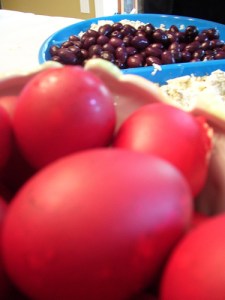
Easter Eggs, photo courtesy Ramblin Rose

Easter Eggs, photo courtesy Ramblin Rose

The red dye represents the blood of Christ and the hard shell symbolizes the tomb. After dinner we have what is called tsougrisma, an egg tapping competition. The party guests take hard-boiled eggs from the bowl and try to crack others’ eggs by tapping their egg against it, the person whose egg survives the tourney is said to be blessed with luck and get bragging rights (the rest of us get egg salad for a week). It’s rumored my great-grandmother’s win streak was due to a marble egg.

We still have an Easter egg hunt for the little kids using more (American) traditional plastic eggs in the yard. We play bocce and croquet, and the youngest get Easter baskets.  But the wonderful celebration in which we blend what we call American Easter and Greek Easter is my favorite holiday of the year, because it means spring is here and summer sunshine is on its way.