Leave a comment

Athens: Then and Now

I, like a lot of hoarders, happened to have several old and out-of-date books on my reference shelf and as you can imagine several are on Greece. So I thought we’d take trip back in time to the summer of 1983, a bygone era when the Police were at number one with their stalker-y hit “Every Breath You Take” and literary greats like Stephen King were making us weary of classic cars in his novel “Christine” and Chevy Chase was taking a family road trip in “National Lampoon’s Vacation” in the theaters. Let’s sit back, relax and research a trip to Athens in 1983.

We'd all probably jump at the chance to visit Greece and pay the prices in this 1983 Frommer's guide, but would that be an economic advantage?

We’d all probably jump at the chance to visit Greece and pay the prices in this 1983 Frommer’s guide, but would that be an economic advantage?

The old Athens airport was small, extremely small, and it was located right in the city. I loved that location for the view. When you flew in you could see the city sitting in the vast caldera and the Acropolis at the its center. You only needed a quick (and very cheap) bus ride to the city center. The bus would most likely drop you off at Sytagma Square (Constitution Square), the center of Athens and home of parliament and the perfect jumping off point to find your hotel and journey the ancient downtown known as Plaka.

Where would you stay? Let’s take a look. The book I’m reading is complaining about the rise in costs from a few years ago.

 “But you’d better hurry: a few years ago the deluxe rooms were going for $54, and you could get simple but comfortable rooms for as little as $8 a night. Now the deluxe rooms are $100 and up, the budget rooms $12 and up.”

In ’83 the Athens Hilton had double rooms going for a max of 11,612 drachmas (no EU yet) or $194. The current price for a double room at the Athens Hilton can be $342 a night. But don’t rush to the conclusion you’re getting gypped. When we calculate the inflation rate you come out ahead in today’s dollars; that $194 in 1983 dollars is $455 a night. Other hotel options aren’t so favorable. The moderately priced hotels like the Hotel Herodion had double rooms for $41 in 1983; that’s $96 accounting for inflation. Today a room goes for $236, you lose the inflation war here.

“If you need to survive on pennies a day, you needn’t get skinny in Athens.  There are plenty of restaurants in this guide where you can eat, and eat well, for under 360drs ($6),” says Frommers 1983-1984 Guide to Athens.

The inflation calculator puts that $6 at $14 in today’s money, which doesn’t sound bad until you realize your average modern meal is about $20 — not including wine.

The tickets to the Acropolis in 1983 were $1.08 ($2.50, adjusted). Admission today will run you $16. It’s almost like they just realized you can make money off a global treasure.

The point of this exercise in economic time travel is to remind us that when “seasoned” travelers regale you with tales of rooms for $20 and meals for pennies, you can bask in the glow of their good-old-day memories, but don’t forget that inflation can change the story in a hurry.

1 Comment

Fly Me to the Moon

Hit play, please. We’ll wait.

Can’t say we buried the lead.

We were fortunate enough to be selected to attend an incredible NASA Social event at Wallops Flight Facility on Wallops Island, Virginia September 5th and 6th as NASA (as well as several private agencies) prepared to and launched the Lunar Atmosphere and Dust Environment Explorer (LADEE).

Quick note: LADEE is pronounced “Laddie”, not “Lady” as you might expect. We asked why and the father of the project said there was no particular reason. That’s just the way the people in the room pronounced it when the acronym was formed.

NASA Television got some pretty good video of the launch, too.

We’re both space enthusiasts – geeks, if you will – so this opportunity was very exciting for the two of us and 48 other attendees from across the country (you may have heard Westminster, Maryland resident Christian Ready providing color commentary on our video clip – thanks, man!).

Photo Courtesy NASA HQ PHOTO.

Photo Courtesy NASA HQ PHOTO.

Launching a rocket into space is pretty cool on its own, but the really fascinating stuff starts happening in about a month when LADEE reaches the moon. After some system checks, the spacecraft will start the scientific phase of its mission which will last about 100 days. LADEE is outfitted with three scientific instruments: a mass spectrometer, a UV spectrometer and lunar dust experiment equipment.

Back in the Apollo days, we thought the moon had no atmosphere (most of us probably learned that in school). But today we know the moon does have an atmosphere, it’s just very thin and its molecules don’t often interact with one another.

As you can see in the sketch above, Apollo astronauts noted a strange glow over the horizon near the terminus, the line between day and night. At the time we didn’t have a good explanation for what was causing the glow, but today scientists think it’s moon dust responding to changes in electric fields as day turns to night.

Enter LADEE.

The approximately six-foot-tall spacecraft (model pictured above) will dip into the lunar atmosphere and use its instrumentation to figure out the elements involved and if and how they interact with moon dust. The information it sends back will not only help us understand the moon, but also other planetary objects with weak atmospheres (see Mars, asteroids, Phobos, Deimos).

That’s not all LADEE will be doing over the next 100+ days (hint: LASERS), but we’ll save that for another post. For the moment, we invite you to consider this: NASA is doing some pretty amazing things in its efforts to expand our knowledge about our universe. Thanks to NASA Social, we had the chance to meet a lot of people behind the mission, the launch, the science and beyond. Thank you for being so engaging with the public, NASA. You gave us an unforgettable experience and enough inspiration to keep us stargazing and hungry for knowledge for many years to come.

Leave a comment

A Short Stay in the Eternal City

When we hear someone speak of Rome the name alone evokes imagery of togas, Gladiators, pasta and more than 2,800 years of history. It’s called the Eternal City for a reason, and with all that history there are plenty of highlights to fill any trip. I have a short list based on a 2-day time frame of my must-see locations in Rome.

Must-Sees

“You should see the Colosseum, Spaniard,” Proximo told Maximus in the movie Gladiator, and you should too. You will also be relieved to know 50,000 Romans won’t be sitting in the stands waiting for you to die at the hands of a well-trained killer. You will probably arrive by not slave cart, but Metro, the Roman underground. Fare is 1 euro or approximately $1.30. You can also get there by bus as we did. The Colosseum sits in the middle of a massive traffic circle and creates a juxtaposition of the ancient and modern, though the vibration and pollution coming from the cars is slowly destroying the symbol of Rome.

Inside the Colosseum.

Inside the Colosseum.

You’ll be presented with a lot of options for tours from the moment you get off the bus. The Colosseum is swarming with tour guides.  I will openly admit it is a game of roulette. You run the risk of ending up with a lousy guide whose English is less than great, but these guides often have already bought a book of tickets, $15 each, and you can skip the ticket line. If you have the patience to stand in line for 40 minutes on average, you can get the “Official Colosseum Guided Tour” for an additional $5.50. We were very fortunate; the guide we got was wonderful.

I haven’t taken the Walks of Italy Tour but my experience with their tours in Florence makes me comfortable recommending them for high-quality tours. You will need to book in advance. The tour includes VIP access to the arena floor, top tier, the underground as well as the forum and Palatine Hill, a 3.5-4 hour tour. If you can afford the $100 price tag you’ll get a quality tour with admission. The choice is yours: book in advance, take your chances with tour guide roulette, or just get rent the audio tour, it’s available near the ticket counter for $5.

The wide open space across from the Colosseum  is filled with crumbling ruins of the Roman Forum, the center of political and economic life in ancient Rome. The rules for finding a guide still apply, though many guides include the Forum in the price of your Colosseum Tour.  You will get the chance to see the spot where it is believed that Caesar was assassinated by the Senate of Rome in 44 BC; you might even see fresh flowers laid on the spot. The temple of the Vestal Virgins, the ancient order of nuns that tended the eternal flame of Rome in the temple of Goddess of the Hearth Vesta is also nested in the Forum.  If your guide is on his game he’ll tell you some of the naughtier stories of the temple, as well as the gruesome details of what happened if you “lost” your virginity. I do recommend a guide; unless you are really good at reading maps you will have trouble discerning one ruin from another.

The Pantheon (for its marvelous dome), the Spanish steps (for the great people watching) and the Trevi Fountain (for it iconic beauty) are quick stops you should squeeze in if you have time. If you only have two days to sight see, the only other place you need to go in Rome isn’t actually in Rome, because it’s its own country: the Vatican. The Vatican is the home of the Pope, the leader of the world’s billion-member Catholic Church and as many conspiracy theories as pieces of art. I recommend reading Dan Brown’s Angels & Demons as a conspiracy primer.

What We Missed (and why you shouldn’t)

I am going to admit right off, we have never been on a tour of Saint Peters or the Sistine Chapel, it was just bad timing on our part. But, I recommend doing it. The art housed in the Vatican is listed on the church’s balance sheets as $0, because it is truly priceless. The sculpture “Pieta,” Mary and Child (Jesus) by Michelangelo is considered to rival his David for his greatest work. The frescos on the wall are by almost every great master of renaissance art. The Sistine Chapel alone with its frescoed ceiling of the book of Genesis are worth the visit.  A friend of mine who is an atheist visited the Vatican and said it was the highlight of his trip. So, you don’t need to be religious to appreciate the treasure trove of religious art.

I would love to take a great tour and know there are many to choose from. The most highly recommended through my research are Context Tours, an often-cited but expensive tour company, and our favorite, Walking Tours of Italy.

I have to explain, especially after raving about all the art work in the Vatican, the reason we didn’t do a tour. Neither of us are Catholic, so we ignorantly planned to visit the Vatican on our second day in Rome… which just happened to be Palm Sunday. Saint Peter’s Square was packed with pilgrims waving palms and Pope John Paul II was presiding over his final Palm Sunday mass, sitting on a golden throne and projected on a jumbo-tron. Again, we’re not Catholic, but we both had goosebumps (once we realized what was happening around us).

Where to Stay

The Hotel Morgana at $111 a night is only a few blocks from the train station and the rest of Rome’s mass transit. The hotel has modern styling and an English-speaking staff that are willing to help you with arrangements while you are in town. The second is the pleasant Hotel Pomezia for $94 a night. The small hotel has wifi (today – they didn’t have it when we visited. Amanda fixed the computer at the front desk and earned a few minutes of time to send a quick email home) and is only a few blocks from the Pantheon in the Piazza Navona neighborhood. We stayed there a few years ago and found the rooms spartan but clean and the staff friendly.

I know many of us make Rome a quick stop on a larger tour of Italy and I hope that I am only confirming your instincts of what to do. You may meet someone who claims these sites are too touristy and not to go, but there is a reason they are filled with tourists and have been for centuries, they are unique and an important part of our collective global history and shouldn’t be missed.

Leave a comment

The Cost of Our African Safari

We knew our safari in Tanzania would be a trip of a lifetime, and it was. We also knew it would cost us a lot more than our typical getaway, and it did.

Was it worth it? Hell yeah.

Would we do it again? In a heartbeat.

That said, we thought others who share our dream of visiting Africa on safari might find use in a breakdown of what it really cost. Like we said, we knew it would be a big-ticket trip from the outset. Our ballpark estimate for the grand total was $10,000 for the two of us. As we neared our trip, some of the less obvious costs had us feeling like we were hemorrhaging money and wondering when it would stop.

First, the cost you see from the very beginning of the planning process: land arrangements. Our particular itinerary with the Africa Adventure Company is no longer available, but our 6-night, 7-day safari package with a night in Arusha on arrival and a day room before we left was $3,150 per person. That included everything from ground and air transportation to lodging and food (drinks were extra, but priced similarly to here in the U.S.).

Next up: getting to Tanzania. International airfare (two 8.5-hour flights) was $1,450 per person. Not a bad price considering the distance we were covering.

The Africa Adventure Company prepared us well for the cash we’d want to have on-hand for tipping. Reading through their comprehensive pre-departure packet, we learned that tips are most appreciated in U.S. dollars and that a dollar goes a long way in Tanzania. They recommended about $30 per person per day for our private tour guide and $5 per person per day for the camp staff.

The company also recommended bringing $500 per person for additional expenses (the aforementioned drinks and souvenirs). We thought that sounded like way too much money for us, so we brought $500 in cash for the two of us. We came home with nearly all of it, but it was nice knowing we wouldn’t be out on the Serengeti looking for an ATM.

We were advised to purchase medical evacuation insurance, and gladly paid the $69 per person for the peace of mind. We also needed $100 per person to cover our Tanzanian visas.

Then it was time to get our vaccinations. We both needed shots and prescriptions to protect us from nasty stuff like malaria and polio (that was a booster, of course), plus antibiotics and over-the-counter medication to have on hand if we came down with traveler’s diarrhea. The shots alone ran us $600 (the office didn’t bill insurance companies, but our insurance did reimburse us for about half of that). The prescriptions tacked on another $100.

As we surveyed our packing list, both Zeke and I found that we needed a few items to round out our safari wear. Zeke spent about $150 on shirts, I spent about $250 on shirts, a jacket, socks and new shoes.

One more thing: our borrowed 500mm lens was $150 (and paid for itself the first day, our photos wouldn’t have been nearly as good with a standard telephoto).

So, math geniuses, here’s the grand total:

Land Arrangements:    $3150 x 2 = $6300

International Air:           $1450 x 2 = $2900

Tips:                            $360 (guide) + $60 (camp staff) = $420

Cash:                           $500

Insurance/Visas:          $169 x 2 = $338

Vaccinations:                $700

Safari Clothing/Shoes:  $400

Lens Rental:                 $150

GRAND TOTAL:     $11,708

So there you have it, the price tag of our African safari of a lifetime. The experience was worth every penny, even if our planning estimate was a little off.

Leave a comment

A Visit to Venice

It was mentioned to me in passing recently that my post were a little heavy on the Hellanism (Greece).  So in this post we’ll take a look at Venice, Italy and best bets when visiting the city.

I would first like to explain if you are just visiting Earth from a far-off planet (welcome!), the Italian city of Venice isn’t actually floating on the water. The ancient city was built by mainland Italians on a series of low-lying islands as a refuge from the constant barbarian invasions after the fall of the Roman Empire in the west. The structures are built upon pylons driven into the marsh and encased in a stone foundations.  The floating appearance comes from the Venetians’ habit of building right to the water’s edge and the fact that every piece of dry land is taken up by stone walkways and structures. Yes, the city is sinking at a rate of 2-3mm a year due to compaction and other factors, but that’s nothing compared to the 2-3 inch rise of sea level per decade causing more and more instances of “Alto Aqua” (high water) swamping the city. So, visit Venice now, while it doesn’t require SCUBA certification.

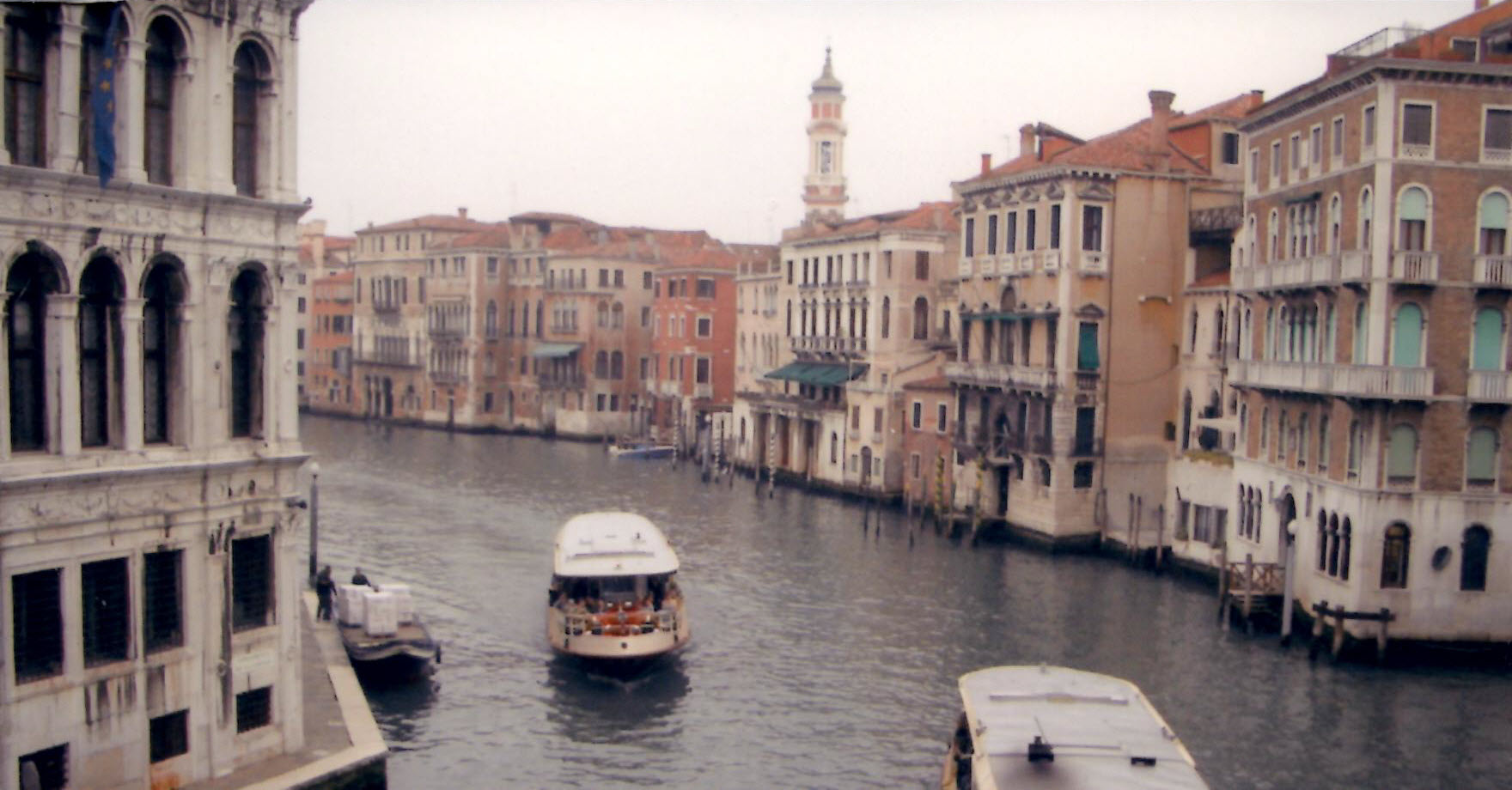
Vaporetto (water buses) cruise up and down the canals.

Vaporetto (water buses) cruise up and down the canals.

When you arrive in Venice, you will most likely arrive by air at the Aeroporto Marco Polo on the mainland, because any landing closer to the city would take Captain Chesley “Sully” Sullenberger’s skills. We found a multitude of ways to get to the city when we arrived. You can take a private water taxi if you have $100 or more to spend on transportation and want to feel like a high roller, or take the bus like normal people do from the airport to Piazzale Roma for about $4. Your Venice experience truly begins as you board a vaporetto (water bus) to take you from the piazza across the lagoon to the island city for about $9. The biggest complaint about the vaporetto is that it is slow.  I happened to love it; I found the 20-minute trip a great chance to unwind. The boat is also a great platform for getting pictures and video of the city from the water. Check with your hotel ahead of time and know which vaporetto stop is closest to your hotel.

Warning: Your baggage is heavier than it appears! Yes, you packed it but you really didn’t have to carry it very far (at least to this point). You probably hauled it to your car, to the trolley at the airport, then to the bus. Upon arriving in Venice, you may have to walk blocks and blocks to get to your hotel. If you’re wheeling your luggage, know that the wheels can be more trouble than help on cobblestone, stairs and bridges. Dragging a bag will get old really fast. Hiring a porter will cost an arm and a leg, so we suggest wearing a backpack, packing light, or suffering the consequences.

Accommodations

A few places that have reasonable rates, for Venice, include The Hotel Bernardi-Semanzato (a family run hotel in a converted palazzo for $146 per night) or the Locanda La Corte (also $146 a night). The prices may very a lot depending on the time of year. The Al Gambero, where we stayed just off San Marco Square cost us $120 per night in the off season, March. A check of the price in the high season has rooms going for as much as $400. The rooms were great with silk wall treatments, nice bathrooms, classic furnishings and we even had a window opening to a small canal. We found it the perfect place for our first trip to Venice. Warning: Elevators are rare in Venice! If you have trouble with stairs ask for a room on a lower floor, 0 if you can, because ground floors are 0, the next one up is 1 and so on.

Sightseeing

Assuming you’re not a honeymooner and you plan to leave your hotel room to see the legendary city of Venice, here are a few must do’s. You should visit the Plazzo Ducale (Doge’s Palace). The elaborate marble building is striking and was the home for the elected Dukes of Venice for over 1000 years. The building is filled with art and history; we suggest taking an English language tour. The cost of admission is $17.50 to the palace or you can get a St. Mark’s Square Museum Pass for under $25. The pass is good for one visit to the Doge’s Palace, the Museo Correr (Art and History), Museo Archeologico Nazionale (Archeology) and Biblioteca Nazionale Marciana (National Library).

The most beautiful structure on St. Mark’s square is the Basilica di San Marco (Saint Mark’s Basilica), the final resting place of Saint Mark.  The architecture is a combination of Catholic Gothic, Byzantine, and Muslim influences.  The four bronze horses above the entrance were stolen from Constantinople during the 4th crusade.  The interior of the church is dark, but illuminated by hundreds of pounds of gold leaf and jeweled mosaics.  The entrance to the church is free but the small museums inside the church, like the treasury and presbytery (area of church reserved for clergy) will cost an extra $4. Unless you have a special interest in the church, the additional areas aren’t necessary. You can in take all the architectural and artistic highlights from sitting quietly in a pew. I do suggest dropping a euro or two in the donations box as a thank you for all the free art.  Warning: The dress code is enforced! No shorts, bare arms, or skirts above the knee, please.

The Piazza San Marco (St. Mark’s Square) was once called the drawing room of Europe by Napoleon. You will find yourself surrounded by tourists and pigeons these days, but the arcade-boarded square is still the heart of Venice.  I suggest climbing the campanile (bell tower) ($8 in 2004, now $10.50) for a great view of the city.  You will be surprised to notice you can’t see any of the canals except for the Grand Canal.  The buildings are too tall and the canals are too narrow to be seen.

You need to take a gondola ride. I know it may sound cliché and the cost may seem a little high at $120 to $140, but it is Venice. You know me, it’s all about the story and a gondola ride is one of the great ones. I know for me it is the location of my wife and I’s much disputed first kiss. She says I kissed her, I say she kissed me. We may never know for sure because we were drinking two bottles of wine a night and were fairly drunk most of the time. I would ask your hotel to recommend a good gondolier. We had a guide who spoke English well and gave us a history lesson as we glided along for 40 minutes. You should check out the Instituzion per la conservazione dell goldola e la tutela del gondolier (The Gondoliers Guild or Union) for the official going rates. I also suggest watching Discovery Atlas Italy to see what it takes to become a Gondolier. They don’t just let anyone row your boat.

If you’ve worked up a good thirst and want to get off your feet, have a drink at Harry’s Bar: the home of the bellini. Sipping a peach and prosecco drink is a great way to spend the evening. You’ll also be spending it in the company of greats that frequented Harry’s like Marconi, Charlie Chaplin, Barbara Hutton, Orson Wells, Truman Capote and Ernest Hemingway.

While you drink your bellini, relax and know you’ve checked Venice off your list of places to see before you die (and all before Venice disappears into the sea!). In the last 10 years amazing efforts have been made to secure the city for future generations so it can continue to earn its marvelous and romantic reputation, but the task is far from complete and when fighting Mother Nature she always has the upper hand.

1 Comment

Greek Island Hopping: Ios

I like to think if Peter Pan took place in Greece the island of Ios would be Never Land.  The sun-drenched island just to the north of Santorini in the Cycladic Archipelago is the place where the ferry stops and every college student with a backpack disembarks. I came across my very own Never Land on my first trip to Greece back in 1998.

I, like Peter, was spirited there by a fairy, just spelled differently than the Tinker Bell variety. I even had my very own Wendy, a 20-year-old English girl named Kate, to share the adventure with. I had met Kate a week before on Santorini. Together we found a world filled with young people who all shared a few things in common: tight budgets, an abundance of alcohol-fueled mirth, a lack of responsibility, and a wish to get laid. I had a wonderful (and dare I say magical) time chasing sea nymphs, climbing mountains and running through narrow passages with the children of the night in a bacchanalian delight.

But, like when Wendy returned home from Never Land, adulthood was calling. I was finishing school and wouldn’t have weeks to lounge in the summer sun. Instead the world of work would replace those blissful days.

Years later when my wife (not Kate) and I told our friend Yannis, a local Greek travel agent, we were headed to Ios he tilted his head and said in his heavily accented English, “why? It is for young people.” I was a little concerned; had I outgrown my Never Land?

The answer is yes … and no, not in a million years. Here are some tips for visiting Ios even if you are too old to believe in Tink and her friends (the preceding statement was followed by vigorous clapping as to not let any fairies die from the possible lack of belief).

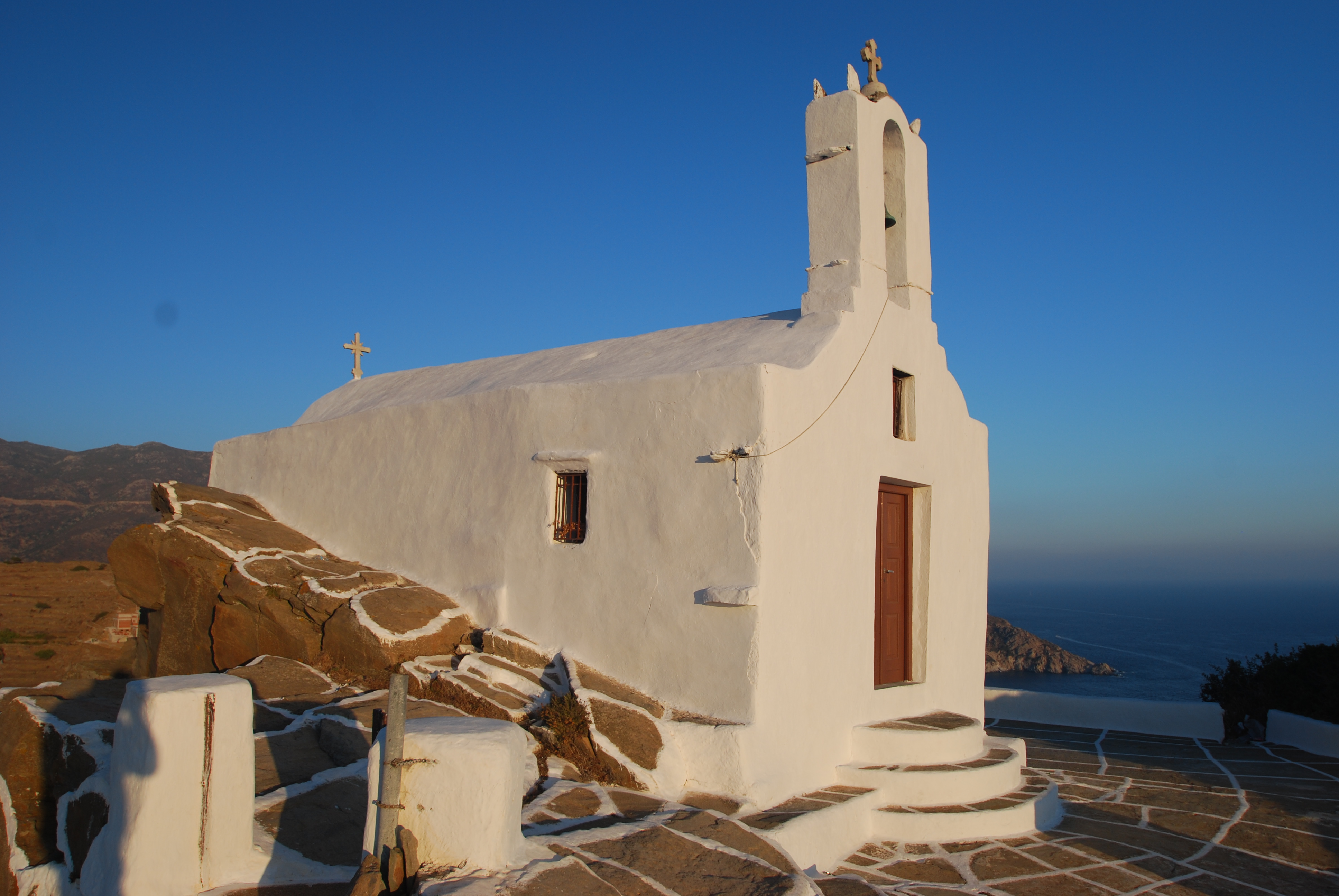
One of Ios' 365 churches.

One of Ios’ 365 churches.

Ios is a 42-square-mile rock in the Aegean Sea with a permanent population of 2,024. The island, like most of Greece, has been inhabited for thousands of years. The most notable ancient resident was the mother of the Greek poet Homer. Homer himself is buried there, so I guess he is a current, permanent resident. The island is also home to 365 churches; one can only guess that it’s to balance out all of the sinning that goes on by the aforementioned college kids.

The main beach is Milopotas Beach, just down the hill from Chora, considered by many to be one of the best in the Aegean with its long stretch of golden sand and access to facilities such as bars, pools and tavernas. You may think it a bit crowded, but it’s not nearly as crowded as the main beaches on Mykonos or Santorini.

The second most-visited beach is Manganari on the south coast of the island. It’s a great refuge from the meltemi winds, a wind from the north that peaks in the summer months and can blow at 38 miles-an-hour, enough to ruin a great beach day. You can access the beach by bus from Chora, a rather treacherous trip as I remember, or take boat.  You won’t be stranded when you arrive; there are taverns just off the beach. I do remember on my first visit there was one very small tavern and not much else but a lot has changed in more than 15 years. The atmosphere on the beach is very family oriented and because of its remoteness it doesn’t get to crowded.

If you’re looking for true isolation, pack a lunch and plenty of water and have a boat drop you at Nero beach, a small sandy cove on the southwest side of the island. You will have the beach to yourself most of the time, though some boats on the way to Manganari will stop there to let their passengers out for a swim. One word of caution: make sure you establish a clear pick-up time with the boat you hire to get you to the beach. There’s no way off the beach other than by boat. If you’re comfortable with your nautical abilities, you may want to consider renting a skiff and sailing there yourself so you won’t be forgotten.

The lovely pool at Homer's Inn Hotel

The lovely pool at Homer’s Inn Hotel

Ios has plenty of accommodations from camping to luxury. I’m assuming that if you’re a grownup and have – you know – money, you can afford a room with its own private shower and toilet. We camped by the beach once and found ourselves a buffet for the local mosquitoes. I don’t recommend it. Here are three places that might sound good to the childless yuppie side of you. Homer’s Inn Hotel is a family-run hotel with basic but clean rooms. The pool is amazing, one of the best pools at any hotel we’ve visited. You’ll love the rates, too: between $78-$100 a night. The walk to Chora is about 10 minutes up the hill and the port is 10 minutes down the hill. I give it big thumbs up for location and value.
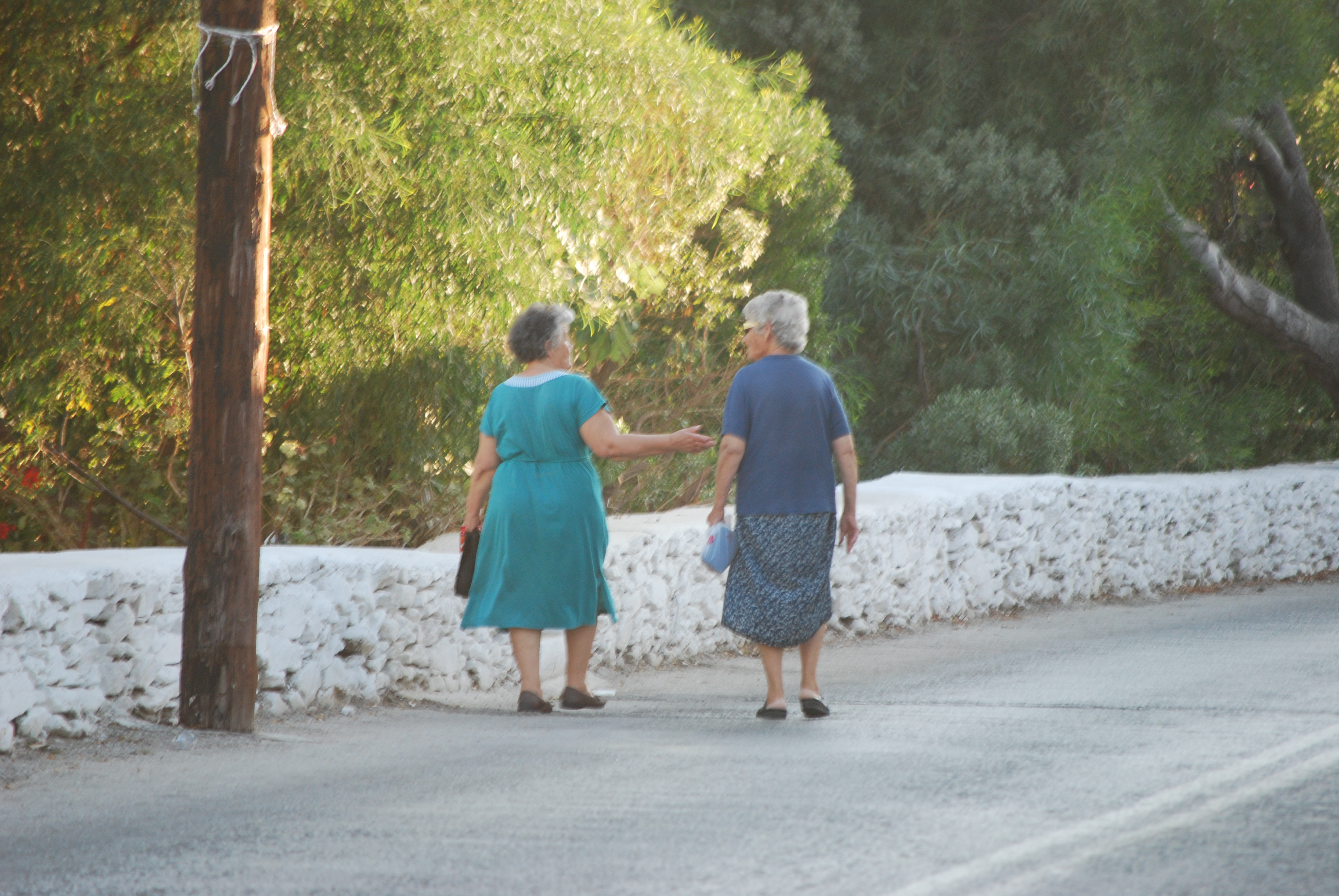
Two Yia Yias walk down the hill to the port.

Two Yia Yias walk down the hill to the port.

I have not stayed at Levantes Ios Boutique Hotel, but I have seen the exterior many times. The hotel is perched on a hillside above Milopotas Beach and received several great reviews on Trip Advisor. The views from that hillside of the beach and the sea are amazing. I would love to stay there one day. The prices are equivalent for boutique hotels in the states, running about $200 a night.

The Liostasi Ios Hotel & Spa serves up truly luxurious accommodations. We have never spent the night but did get to spend a week lounging by their pool due to an arrangement between the Liostasi and the pension where we were staying. You won’t find any backpackers here; the cost of $230 a night is a little out of their budget (besides, if you’re a backpacking 20-something on Ios you need every cent of for your bar tab). The location of the hotel is a 5-minute walk from Chora and the bus stops taking you to the beach or the port.  I really think this hotel is worth the money, the only reason we didn’t stay there our last trip was they were completely booked. Make your plans early if this looks like the hotel for you.

As usual I can’t recommend to many restaurants due the constant changes in the restaurant scene. I can recommend two places that have been around for years.  Louis Tavern located on the tiny main square in Chora serves one of the best English breakfasts in Greece.  The tavern has been around for more than 70 years and I don’t expect it will be going anywhere soon. I also recommend Pinocchio, a great Italian restaurant with simple Italian fare. If you don’t like crowds I recommend going out around 8:00 p.m. when it begins to cool off and you are still two hours before the party population awakes for their nocturnal merriment.

The lesson? You can go to Ios as a grownup. You may not find yourself drinking flaming Lamborghinis at 2:00 a.m. because a hot Australian bartender named Jada said you should try it, then rushing down to the beach to skinny dip in the dark with total strangers… but you can still have a great time relaxing by the water, pool or sea, and soaking up the sun, all without the hangover.

1 Comment

Bang for Your Travel Buck: Mexico

We woke up a couple of weekends ago and realized that we had yet to plan a vacation for my scheduled time off in September. So, being the would-be jet setters that we are, Amanda gave me a challenge: $1,000, pick a vacation and, well, go. I gladly accepted.

The first thing I did was make a list of places we’d like to visit and added a few places we thought we could travel to by car to save some money. I chose Toronto, Montreal and Atlanta (we have friends there — hi ET!). I also put Key West, Florida on the list thinking we’d fly into Miami and drive. It’s a place we’ve both been wanting to visit.

So here’s how it went.

First I planned out the time it would take to drive to each location: Toronto 9 hours, Montreal 10.5 hours, Atlanta 10.5 hours. All very doable drives. I grew up frequently traveling to my family beach house in North Carolina which in the old days was an 8.5-hour trip, so anything under 12 is easy. The drive from Miami to Key West is only 3 hours 47 minutes.

The next step was to find hotels, ideally of the boutique or historical variety and generally centrally located. We don’t want to drive once we reach our travel destination, so we don’t like to stay at motels in the suburbs. I hopped over to Hotels.com and Orbitz to search each city for hotels. When I looked (almost a month ago) for rooms available for check in Monday, check out Friday I found some nice candidates. In Atlanta I saw the Melia Atlanta for one with a quoted price of $142 a night, Montreal had most hotels we would like for about $200 a night, and the place we liked in Toronto was almost $250. The hotels and B&Bs in Key West were also more than I had expected, each in the $150 range. I was quickly finding out because of our taste in hotels the bulk of the trip budget would be taken up by lodging.

The fuel bill would also be significant, even for our fuel efficient Espresso Colored Fiat, affectionately called the Bean. The gas for Bean would be $125 for the 1,304 mile round trip to Atlanta, about $110 for Montreal and a little less than that for Toronto. We would have to get airfare to Miami and rent a car for Key West, $155 for the car rental (not including gas) and $315 for round trip air from Washington, DC to Miami.

I continued to crunch the numbers and once adding in meals, tips, taxis, parking, shopping and sightseeing each of the trips seemed to come close to and around the same mark of $1,000 (give or take). But the idea of wasting a day in transit on the road just didn’t seem efficient and we felt like we weren’t getting the bang we wanted for our bucks. Our trip to Tanzania in March was big bang/big bucks, but it was missing one thing: beach time. So, on a whim, I decided to check out the cost of flying to Playa del Carmen, Mexico and spending four nights there. I was in for a surprise.

I found a boutique hotel with great Trip Advisor reviews in downtown Playa near the beach for $80 a night and flight from Baltimore to Cancun for $780 round trip for two. The flight leaves early and arrives before noon, direct. We will make it from our house to the hotel in six hours! You can’t get a better bang for your buck than that, a trip that ticks all of our boxes (especially a beautiful, swimming-friendly beach). We will, of course, spend some money on the ground meals, tips, shopping, maybe diving, but we couldn’t pass up this opportunity. The moral to the story: just because a destination may be geographically closer doesn’t mean it’s less expensive.

Leave a comment

Greek Island Hopping: Mykonos

The second most popular island in Greece (to Santorini) is Mykonos, and for that reason I tend to stay clear when I can. The island is on almost every cruise ship route and every suggested itinerary for island hopping. That also means it’s crowded and expensive. The island earned its reputation as the home of the chic and fabulous dates back to the 1960s when the rich and famous “found” it and made it their playground.

I will admit, from afar the island’s harbor and its row of ancient sail-powered windmills make a peaceful, picturesque setting. The little peninsula sticking into the harbor from Mykonos town (nicknamed little Venice for building right to the water’s edge) is a jewel.   The narrow streets and alley ways running through the town like white-washed canyons dotted with the bright spots of flowers dangling down from the rooftops are peaceful… that is if you avoid setting foot on the island during the high season, which runs from May through mid-September, when the island sees the bulk of its 750,000 yearly tourists.

If you visit, it will most likely be over the summer months (it does get cool in the winter) so here’s my advice:

Beaches

Paradise is one of Mykonos’ best beaches (not for the prudish, it’s topless and in some cases bottomless), boasting a long stretch of soft, white sand and clear water. If you’re looking for a quiet beach, Kalafati is a good pick. You’ll have to take the bus from town to get there. If you don’t want to have to avert your eyes constantly Ornos is a good selection. The beach is family-oriented, fronted by extensive hotel development and buses run hourly from the south station between 8 a.m. and 11 p.m.

Hotels

The hotel space is at a premium on the island and (like everything else) will often cost 30% more than on any other island. You may want to be in the heart of the action right in downtown, and that’s great if you don’t want to sleep at night. A friend of mine just stayed there last month and said from dusk till dawn the constant thud of club music could be heard and felt through the closed doors and windows of her room.

I recommend hotels that are just outside of the downtown area. You are in Greece, so walking is what you do (unless you have death wish and rent a scooter). The last time we were in town we stayed a family-run hotel at the top of a hill overlooking the town. It was quiet, clean and reasonably-priced and we simply found it by talking to the hawkers at the ferry dock. When you get off a ferry in Greece you will often see a line of representatives from hotels and pensions (rooms to let) armed with brochures and looking for guests. You can negotiate a price (bidding wars are not uncommon) and once you’ve agreed to stay with them they’ll give you a lift to the hotel. I have done this many times over the years and have never felt unsafe. You can also book in advance in this magical age of the Internet. Trip Advisor has some great pictures and reviews to consider.

Food

I’m sorry, but we can’t give you a recommendation on food, because the restaurant scene is constantly changing.

Side Trip

The best side trip from Mykonos is to the tiny neighboring island of Delos. I love Delos. The island is a half-day trip by shuttle boat from the port near Little Venice.  The island was the holiest site in the ancient Greek world and home to 20,000 people. It was covered with temples, many honoring Apollo and Artemis. No one was permitted to be born or die on the island in ancient times (but try explaining that to the many people who were slaughtered as the island was repeatedly invaded).

The Romans, in all their practicality, used the port as a commercial center as well as religious one, selling as many as 10,000 slaves a day on the docks. If you aren’t well-versed in ancient Greek history I suggest exploring the site with a guide. You can find one through many travel agencies. A good guide will point out the niches for oil-burning street lamps carved into the walls of the ancient ruins, the complex sets of drains that are remnants of a sewer system, and amazing 2,000-year-old mosaics decorating the floors of the ruins. Guides are wonderful for providing background knowledge for the beautiful pictures you’ll capture.

Warning: There is NO SHADE ON DELOS! There are NO SERVICES near the ruins! You MUST bring water with you or face dehydration, and be slathered in sunscreen or suffer severe sunburn. The island is covered in white marble and will cook you like a Dutch oven. As always, I highly recommend comfortable shoes.

Mykonos appeals to a certain kind of crowd, and don’t get me wrong, I’m not talking LGBT. I’m talking about people who like velvet rope clubs, $300 flip flops, and the concept of looking good at the beach over being practical. If you’ve been reading our blog you probably know we’re all about practicality, so it’s not our favorite Greek island destination. For us, it’s a stop-over-to-catch-the-morning-ferry kind of island, but it could be your dream destination.

1 Comment

Walking Inferno: Part 2

Again, if you haven’t read Dan Brown’s latest novel, Inferno, don’t worry. While this post does reveal some of the locations the characters visit, it does not contain any plot spoilers.

In our first Walking Inferno post we left our hero and heroine standing in front of a nondescript door next to a grotto in the Pitti Palace in Florence. Zeke and I have walked through that door, although we were coming from the other side. As Brown describes it:

Perhaps twice a day, a VIP tour would arrive outside the space, having walked all the way from the Uffizi Gallery. Ernesto [the guard] would greet them, unlock the metal grate, and permit the group to pass through the little gray door, where their tour would end in the Boboli Gardens.

These “VIP” tours can be hard to book, but only because they sell out fairly far in advance. You can’t just drop by the Uffizi (or even the Walking Tours of Florence office) and join this tour, but if you buy your tickets about six months before your trip you should be able to get in just fine.

As Brown mentions, the tours begin in the Uffizi Gallery, home to masterpieces such as the Portraits of the Duke and Duchess of Urbino (trust me, you’ve probably seen it), and Botticelli’s La Primavera and The Birth of Venus. Our guide gave us a detailed tour focused on the highlights, which was nice because we had walked the entire gallery on an earlier trip to Florence. Then it was on to Vasari’s famous corridor.

Nowadays, the Vasari Corridor still served as a safe haven, although not for Medici aristocrats but for artwork; with its seemingly endless expanse of secure wall space, the corridor was home to countless rare paintings-overflow from the world-famous Uffizi Gallery, through which the corridor passed.

Langdon and Sienna rush through the Vasari Corridor as they try to reach the Palazzo Vecchio for another clue, but our tour was leisurely, allowing plenty of time to admire dozens and dozens of portraits on display.

Langdon and Sienna moved to the portal and peered out, seeing that they were currently perched above the Ponte Vecchio-the medieval stone bridge that serves as a pedestrian walkway into the old city. Below them, the day’s first tourists were enjoying the market that has been held on the bridge since the 1400s.

That sounds familiar (see photo above).

While we’ve never walked (or dashed through) the Vasari Corridor between the Uffizi and the Palazzo Vecchio like Langdon and Sienna, we have visited the palace from the more traditional entrance from Piazza della Signoria.

That's the Palazzo Vecchio at the end of the street, look closely and you'll see Zeke and me in our wedding attire!

That’s the Palazzo Vecchio at the end of the street, look closely and you’ll see Zeke and me in our wedding attire!

The Palazzo Vecchio resembles a giant chess piece. With its robust quadrangular facade and rusticated square-cut battlements, the massive rooklike building is aptly situated, guarding the southeast corner of Piazza della Signoria.

The Piazza della Signoria is full of statues, from Ammannati’s Neptune to a reproduction of Michelangelo’s David. There seem to be two camps when it comes to David, those devoted to the original (which is inside the Accedemia Gallery) and those who prefer the reproduction (because it’s outside, where it would have historically been enjoyed). Take your pick, but we’ve been happy with the reproduction on our three visits to Florence.

Langdon and Sienna’s adventure moves on, both to other parts of Florence (including the famous Duomo and its famous baptistery) and to other cities in Italy and beyond. I think it’s fair to say our favorite parts of Inferno took place in our favorite Italian city.

2 Comments

Walking Inferno

If you haven’t read Dan Brown’s latest novel, Inferno, don’t worry. While this post does reveal some of the locations the characters visit, it does not contain any plot spoilers.

When we learned Dan Brown’s Inferno would take place Florence, Italy, we were both thrilled and hopeful. Brown’s novels are typically full of historical references and descriptions of places both on and off the well-worn tourist track. His latest work was no exception. Main characters Robert Langdon and Sienna Brooks visit the Boboli Gardens, Pitti Palace, Vasari Corridor and Palazzo Vecchio (among others), all places we’ve visited in our three visits to Florence. Langdon and Sienna are, as you might imagine, on the run as they visit these sites. We had the pleasure of seeing them at a much more relaxed pace.

Langdon and Sienna find themselves inside the high-walled Boboli Gardens with the authorities close at their Italian-soled heels (never mind how they get to this point – you can read the book for that!). They’re trying to reach the Palazzo Vecchio to uncover the next clue in their search for a rogue scientist with nefarious plans for the human race.

Using the gardens’ ample cover to keep them hidden, the pair make their way toward the Pitti Palace:

Still almost a quarter mile away, the Pitti Palace’s stone facade dominated the landscape, stretching out to their left and right. Its exterior of bulging, rusticated stonework lent the building an air of unyielding authority that was further accentuated by a powerful repetition of shuttered windows and arch-topped apertures.

Built into the side of the Pitti Palace is a large cave that feels completely out of place:

Over the cave’s yawning entrance, daggerlike stalactites loomed portentously. In the cavity beyond, oozing geological features twisted and dripped down the walls as if the stone were melting … morphing into shapes that included, to Sienna’s alarm, half-buried humanoids extruding from the walls as if being consumed by the stone.

But it’s an insignificant-looking door to the left of this massive cave that becomes the key to our heroes’ escape:

Langdon suddenly cut to his left, away from the entrance [of the cave] and toward a feature Sienna had previously missed – a small gray door to the left of the cavern. Weathered and wooden, it appeared of little significance, like a storage closet or room for landscaping supplies.

When I read that line in Inferno I had to stop and tweet about it:

InfernoTweet

Stay tuned. Next week we’ll share our experiences inside Vasari’s famous corridor and take you to the Palazzo Vecchio, albeit with a little less intrigue and gunfire than Brown’s novel.